





Blocked Ear: Causes and What You Can Do About It

Dealing with a blocked or clogged ear? Learn the causes, from earwax and a cold to pressure changes and sudden hearing loss, what you can do yourself and when to see your GP.
Take the next step for your hearing
A blocked ear or clogged ear is unpleasant. Sounds are muffled, it feels as if there is cotton wool in your ear and sometimes there is ear pain, ringing or mild dizziness as well. Usually the cause is harmless: earwax, water, a cold or a pressure difference. Sometimes it is a sign to call your GP straight away. This article explains the possible causes, how to recognise them and what you can do yourself.
In short
- The most common causes of a blocked ear are earwax, water, a cold and pressure changes when flying or diving.
- Earwax: 5 days of lukewarm water or olive oil (oil usually works faster). Cold or pressure change: swallow, yawn, chew and gently pop your ears.
- Suddenly hearing much worse in one ear for no clear reason? Call your GP straight away.
Blocked ear from earwax
The most common cause of a blocked ear is a build-up of earwax. Earwax protects your ear canal and normally moves outwards by itself. Sometimes that goes wrong: it builds up, hardens and blocks the ear canal partly or completely. You notice it through:
- muffled hearing or a dull sound;
- a full or pressured feeling;
- ringing or an echo of your own voice;
- sometimes mild ear pain or itching.
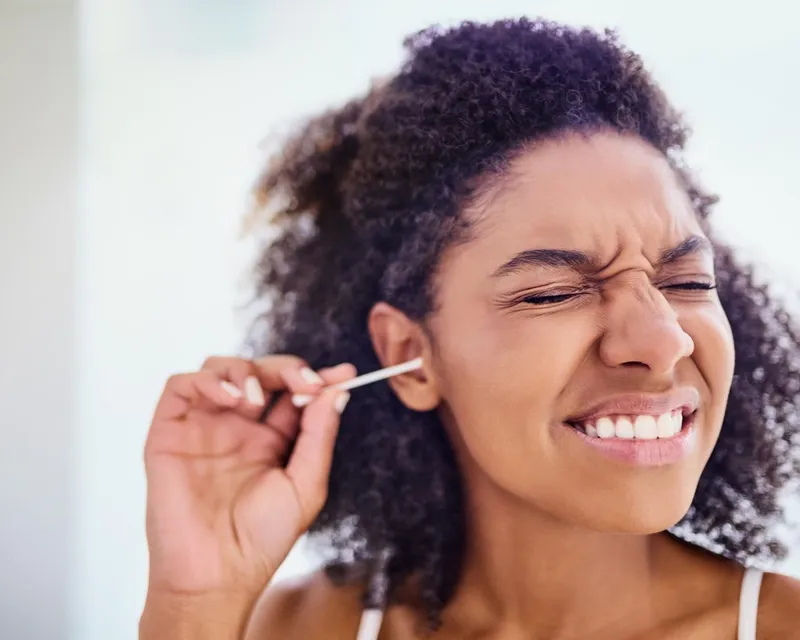
Cotton buds usually make it worse, because they push earwax deeper into the ear canal. How such a plug forms and what to do when it falls out is explained in earwax blockage: causes and symptoms.
Water in your ear
Water in your ear is a common cause of a temporarily blocked ear, especially after swimming or showering. If there is already some earwax in your ear canal, the water can get trapped behind it, or the earwax swells into a plug. Your ear suddenly feels blocked and you hear less for a while.
Tilt your head towards the wet ear, gently pull your outer ear slightly up and back and move your jaw. The water usually runs out. If your ear stays painful or itchy after swimming, it may be an infection of the ear canal; read more in swimmer’s ear and ear pain after swimming. Want to keep water out from now on? Then custom swimming earplugs help.
Blocked ear after a cold
A blocked ear with a cold, flu or sinusitis is very common. The Eustachian tube, the small tube between the back of your nose and your middle ear, gets blocked by mucus or swelling. As a result, the pressure behind your eardrum can no longer even out properly. You notice a blocked feeling, popping or crackling sounds and sometimes mild ear pain.
It usually goes away by itself as the cold settles. This problem sits behind the eardrum, so earwax removal will not solve it. What you can do yourself is described further down under self-care.
Blocked ear from pressure changes when flying or diving
When a plane descends, the air pressure in the cabin rises. Your middle ear has to keep up with that pressure through the Eustachian tube. If it cannot do so quickly enough, for example because you have a cold, your eardrum is pushed inwards. That feels like a blocked ear and can be quite painful. The same happens when you dive to the bottom of a deep pool or in open water.
Swallowing, yawning, chewing and gently popping your ears help to equalise the pressure. It usually clears within a few hours. If you fly often and suffer a lot from pressure, read what flight earplugs can and cannot do. They can reduce the feeling of pressure, but they do not always take away pain that develops in your middle ear. More about popping your ears, flying with children or a cold and when to call your GP is in ear pain and pressure when flying.
Middle ear infection and glue ear
With a middle ear infection (otitis media), there is an infection behind the eardrum, often after a cold. Your ear feels blocked, hurts and you may have a fever. Sometimes the eardrum tears slightly and fluid or pus runs out of your ear. It is most common in children and usually clears up by itself within a few days.
With glue ear, mucus stays behind the eardrum without an infection. Your ear feels full and you hear less well, usually without much pain. According to Dutch GP guidance (Thuisarts), glue ear usually clears up by itself within 3 to 6 months. If your hearing is still poor after 6 months or the symptoms get worse, see your GP. Your own doctor can advise you on the rules and options in your country.
Sudden hearing loss: suddenly hearing much worse
Sometimes an ear is not blocked by something in the ear canal, but you suddenly hear much worse because something goes wrong in your inner ear or auditory nerve. This is called sudden (sensorineural) hearing loss. It usually happens on one side, within a few hours to days, and often feels like a blocked or full ear, sometimes with ringing or dizziness.
Please note
Have you suddenly lost your hearing, or are you hearing much worse in one or both ears, without a clear cause such as a cold or water? Then call your GP straight away (out of hours: the out-of-hours doctor service, or 112 in an emergency). The sooner it is looked at, the better. So do not wait, and do not book an earwax removal appointment.
How earbuds and earplugs can cause a blocked ear
If you regularly wear earbuds, earplugs or hearing protection, earwax can build up more quickly. The plugs hold back the natural flow and can push earwax deeper. This mainly matters with daily or long use, such as sleeping earplugs or music earplugs. Having your ears checked now and then helps. Whether earplugs can do other harm is explained in are earplugs bad for your ears?
What can you do yourself about a blocked ear?
No warning signs? Then you can do the following, depending on the cause. The advice on earwax and nasal drops comes from Thuisarts, the Dutch patient website of the Dutch College of General Practitioners. Your own doctor can advise you on the rules and options in your country.
- 1Earwax: soften it with lukewarm water or olive oil. Once a day for 5 days, let lukewarm water run slowly into your ear from the shower head for 3 seconds, with the blocked ear facing up. Or put 5 drops of lukewarm water into your ear twice a day for 5 days and stay in that position for 2 minutes. Or use olive oil: put a few drops into your ear canal 2 to 3 times a day. According to Dutch ENT doctor Dr Jan Rombout, this usually softens the earwax faster. Ear drops from the pharmacy are not needed: there is not enough research showing that they help. If your ear is often blocked, you can rinse it gently with a bulb syringe and lukewarm water.
- 2Cold: rinse your nose. Rinsing with salt water (1 tablespoon of table salt in 1 litre of lukewarm water) can help. The Dutch GP guidance advises against nasal drops with xylometazoline for a blocked ear.
- 3Cold or pressure change: swallow, yawn and chew. This briefly opens the Eustachian tube. Chewing gum or a sweet helps, especially while a plane is descending.
- 4Gently pop your ears. Pinch your nose, close your mouth and blow very gently until you feel a click in your ears. Do it calmly and a few times, never with force, and stop if it hurts.
- 5Keep out of your ear canal. No cotton buds, no ear candles and no attempts to dig out stubborn earwax yourself. How to keep your ears clean safely is explained in how to clean your ears and remove earwax yourself.
Do not rinse your ear or put drops in it yourself if you have ear pain, grommets or a hole in your eardrum.
When to see your GP
Call your GP straight away (out of hours: the out-of-hours doctor service, or 112 in an emergency) if:
- you suddenly hear much less or nothing at all in one or both ears;
- you have severe ear pain with fever, or feel ill;
- fluid, pus or blood comes from your ear;
- you feel dizzy.
Make a regular appointment with your GP if your ear is still blocked after 5 days of self-care, if you have pain or itching, or if you have grommets or a hole in your eardrum.
Causes, signs and what to do at a glance
| Cause | How to recognise it | What to do |
|---|---|---|
| Earwax | Hearing slowly gets more muffled, full feeling, sometimes itching or ringing | 5 days of lukewarm water. Still blocked? GP or earwax removal. |
| Water | Suddenly blocked after swimming or showering | Tilt your head, pull your outer ear, move your jaw. Pain or itching afterwards? GP. |
| Cold | Blocked feeling, popping or crackling, blocked nose | Rinse your nose with salt water, swallow, yawn, gently pop your ears. Still blocked after 5 days? GP. |
| Pressure change | Blocked or painful ear during or after flying or diving | Swallow, chew, yawn, gently pop your ears. Still bothering you days later? GP. |
| Middle ear infection | Ear pain, fever, sometimes fluid from the ear | Paracetamol for the pain. Severe pain with fever or feeling ill? GP straight away. |
| Glue ear | Full feeling, hearing less well, little pain | Usually clears by itself in 3 to 6 months. Worse, or still hearing poorly after 6 months? GP. |
| Sudden hearing loss | Suddenly hearing much worse on one side, for no clear reason | Call your GP or the out-of-hours doctor service straight away. |
Got a question? We're all ears.
Frequently Asked Questions
Read MoreFAQ
That depends on the cause. If earwax is blocking your ear, spray or drop lukewarm water into it for 5 days. If it is caused by a cold or a pressure difference, swallowing, yawning, chewing and gently popping your ears help, and with a cold so does rinsing your nose with salt water. Do not use cotton buds or ear drops from the pharmacy.
Usually it clears within a few days to a week, as the cold settles. If fluid stays behind the eardrum (glue ear), it can take a few months. Is your ear still blocked after 5 days of self-care, or do you have pain? Then make an appointment with your GP.
Call your GP or the out-of-hours doctor service straight away if you suddenly hear much less or nothing at all in one or both ears, if you have severe pain with fever, if you feel ill, if fluid or pus comes from your ear or if you feel dizzy. In an emergency, call 112.
During the descent, the air pressure in the cabin rises faster than your middle ear can keep up with through the Eustachian tube. Swallowing, yawning, chewing and gently popping your ears help to equalise the pressure. It usually clears within a few hours. If it lasts for days or you have severe pain, see your GP.
Often, yes. Water usually runs out by itself, a pressure difference evens out within hours and a blocked ear from a cold usually goes away once the cold is over. A hard earwax plug does not always clear by itself; 5 days of lukewarm water helps, and otherwise you have it removed.