





Earwax Blockage: How It Forms and What to Do About It
Struggling with a blocked ear from an earwax blockage? Learn how a plug forms, what symptoms to expect and when to have earwax professionally removed.
Take the next step for your hearing
A blocked ear caused by an earwax blockage is a real nuisance: reduced hearing, a feeling of pressure or even a ringing in your ear. In this article we explain how an earwax blockage forms, which symptoms come with it and why it is often better to have it removed professionally. Read on for safe tips and to find out when you should seek help right away.
What is earwax and what does it do?
Earwax (also known as cerumen) is a substance your ear secretes naturally, and it serves a protective purpose: it keeps dirt and bacteria out and helps the skin of the ear canal stay supple. This is how it helps prevent ear infections. Under normal circumstances, your ear moves old earwax outward on its own through movements such as chewing and talking. You can then simply wash this old earwax away while showering.
How does an earwax blockage form?
There are several reasons why an earwax blockage can develop. The most common ones are clearly described below.
An imbalance between production and removal
An earwax blockage forms when the natural removal of earwax is disrupted. More earwax is then produced than the ear is able to clear on its own. The earwax builds up, hardens and can eventually close off the ear canal, either partially or completely.
Common causes
There are a number of additional factors that increase the chance of an earwax blockage:
-
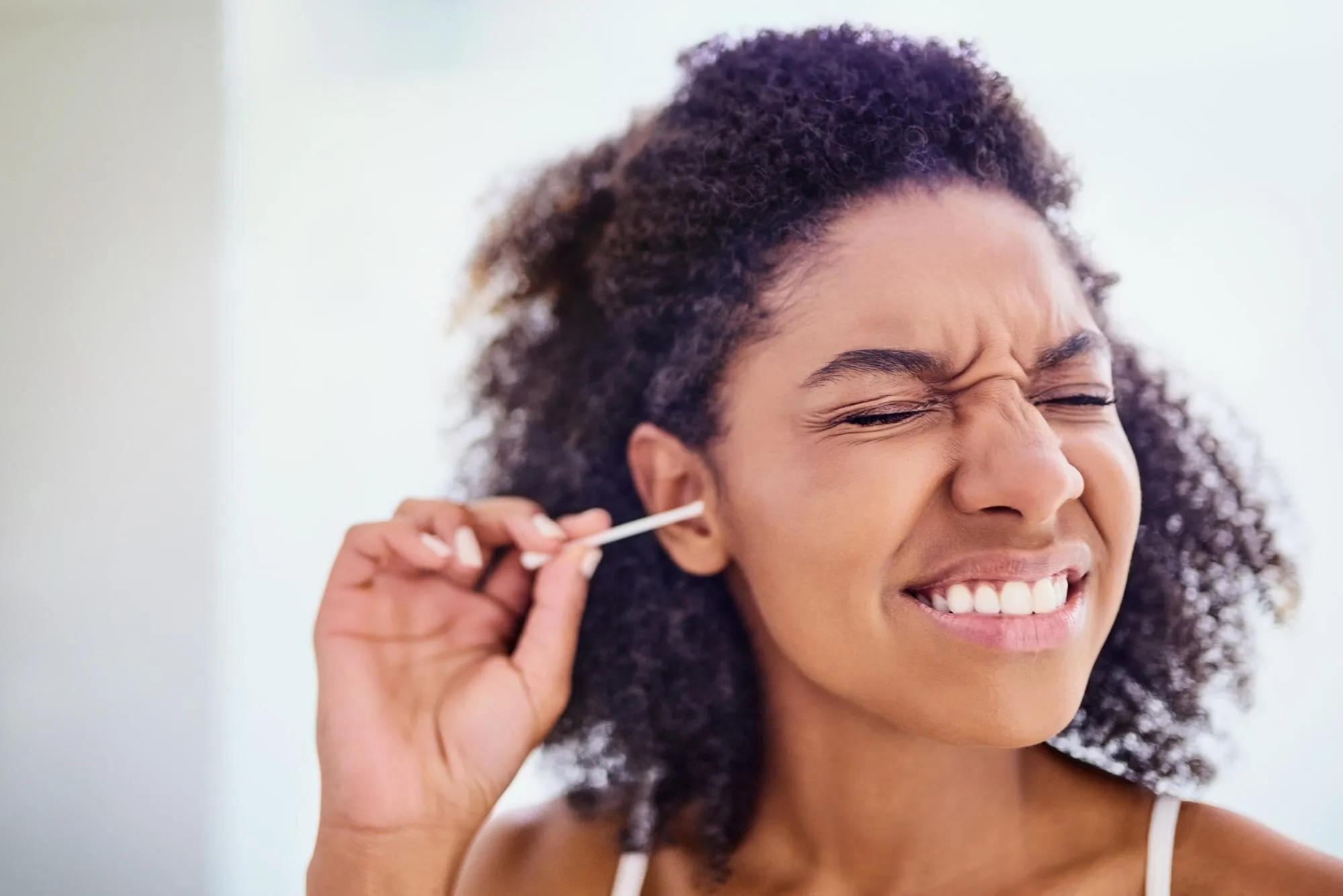
Using cotton swabs (which push earwax deeper into the ear).
-
Earplugs, hearing protection or hearing aids.
-
Narrow or winding ear canals
-
Age: the older you get, the drier and harder your earwax becomes.
-
Excessive earwax production.
This explains why some people deal with an earwax blockage more often than others.
Symptoms of an earwax blockage
The symptoms usually develop gradually and vary from person to person. Common symptoms include:
-
Reduced hearing or a muffled sensation.
-
Earache or pressure in the ear.
-
A ringing in your ear.
-
A buzzing sound in your ear.
-
Dizziness.
-
Tinnitus.
In some cases, a long-standing blockage can even lead to an ear infection caused by earwax.
When should you see a specialist? The warning signs
Contact a specialist or hearing care professional if you experience:
-
Persistent or worsening earache.
-
Sudden hearing loss in one ear.
-
Severe dizziness.
-
Fluid, pus or blood coming from the ear.
-
A fever combined with ear complaints.
In these cases, having your earwax removed by a professional is essential.
How is an earwax blockage removed professionally?
There are several safe methods, depending on the situation: a suction technique (microsuction), mechanical removal with a curette or (in some cases) flushing/irrigation.
Flushing out earwax can be effective, but it requires care and a clear view of the eardrum; incorrect use carries risks.
Many providers (including Audinc) use modern suction techniques and microscopes, so the treatment is safe and as painless as possible. Are you bothered by earwax and would you like to make an appointment to have it removed professionally? Get in touch with Audinc!
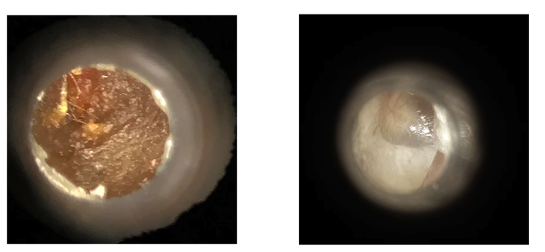
Above you can see a “blocked ear canal” and the same ear after a suction treatment.
Removing earwax yourself: what is fine and what you must never do
If you want to remove earwax yourself, it is important to do so safely. Your ears are delicate, and handling them the wrong way can actually cause more problems.
What is fine
You should only remove earwax that is visible on the outside of the ear. You can do this gently with a cloth or tissue, without inserting anything into the ear canal. In addition, you can use special ear drops if you wish, to soften the earwax. These drops help loosen the earwax, so that it often works its way out on its own.
What you must never do:
Never insert cotton swabs deep into your ear. Although this may seem harmless, you often end up pushing the earwax further inside instead. Also avoid using hairpins, paperclips or other objects to remove earwax. Doing so can damage the ear canal or even reach the eardrum. Flushing forcefully without medical advice is also inadvisable, as this can cause pain or do damage.
How do you prevent an earwax blockage?
You can reduce the risk of an earwax blockage by:
-
Not using cotton swabs.
-
Keeping earplugs and hearing aids clean.
-
Periodically having your earwax removed as a preventive measure, so that it does not build up into an earwax blockage.
Frequently asked questions
Does flushing out your ear hurt?
Usually not. Flushing out earwax can give a strange or slightly pressing sensation, but it should not hurt. If there is any pain, the treatment is stopped immediately. This method is not suitable for everyone, which is why a professional assessment is important.
Does oil help against an earwax blockage?
Oil can help soften earwax, but it often does not fully dissolve an existing earwax blockage. It can even make symptoms temporarily worse. Do your symptoms persist after you have used oil? Then having your earwax removed professionally is the safest choice.