




Step 1
Plan the test day
Request a quote; we schedule the test day and draw up the testing roster for your team together.
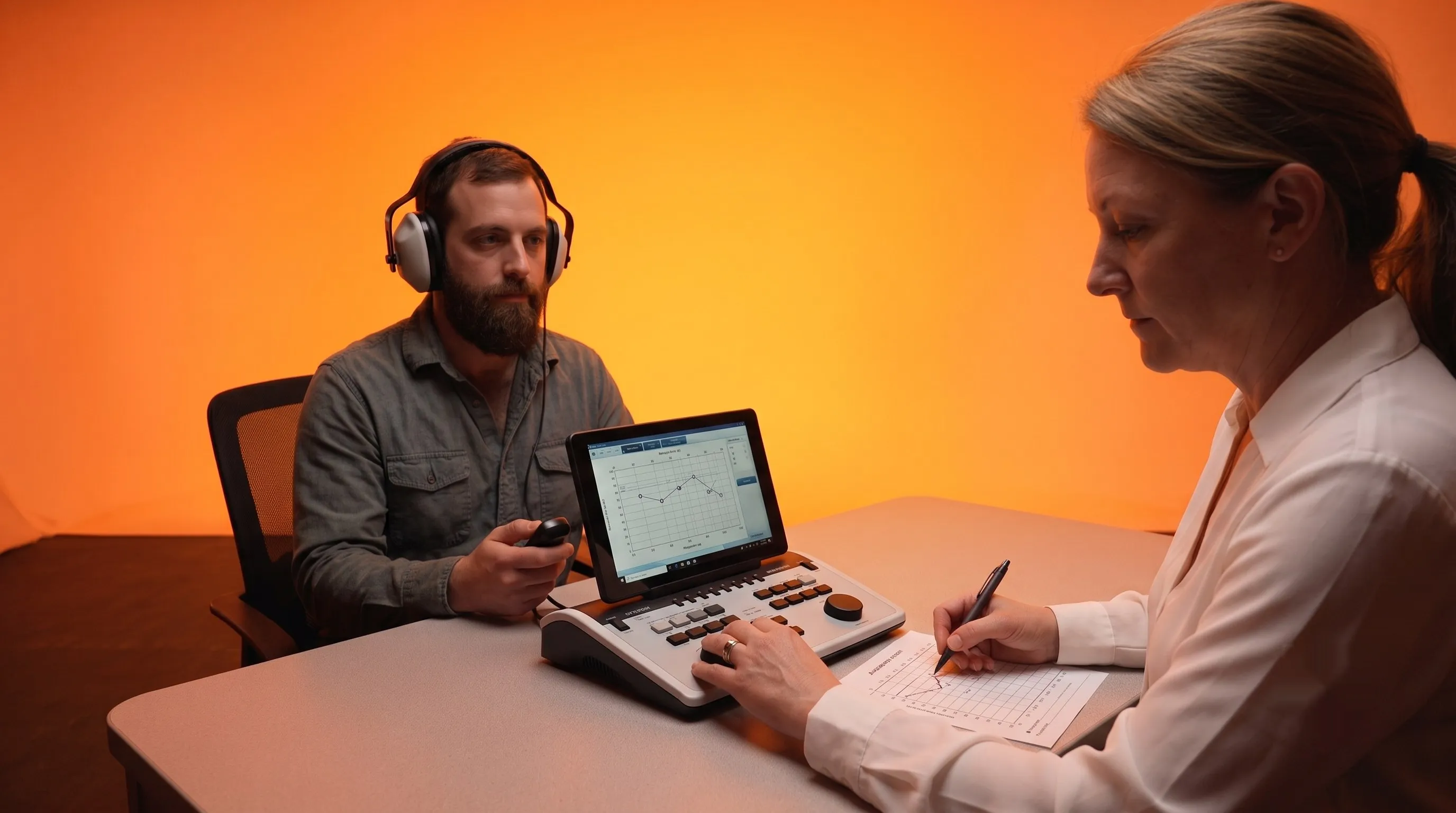
On-site audiometric testing to monitor your team’s hearing over time and catch early signs of noise-induced hearing loss.
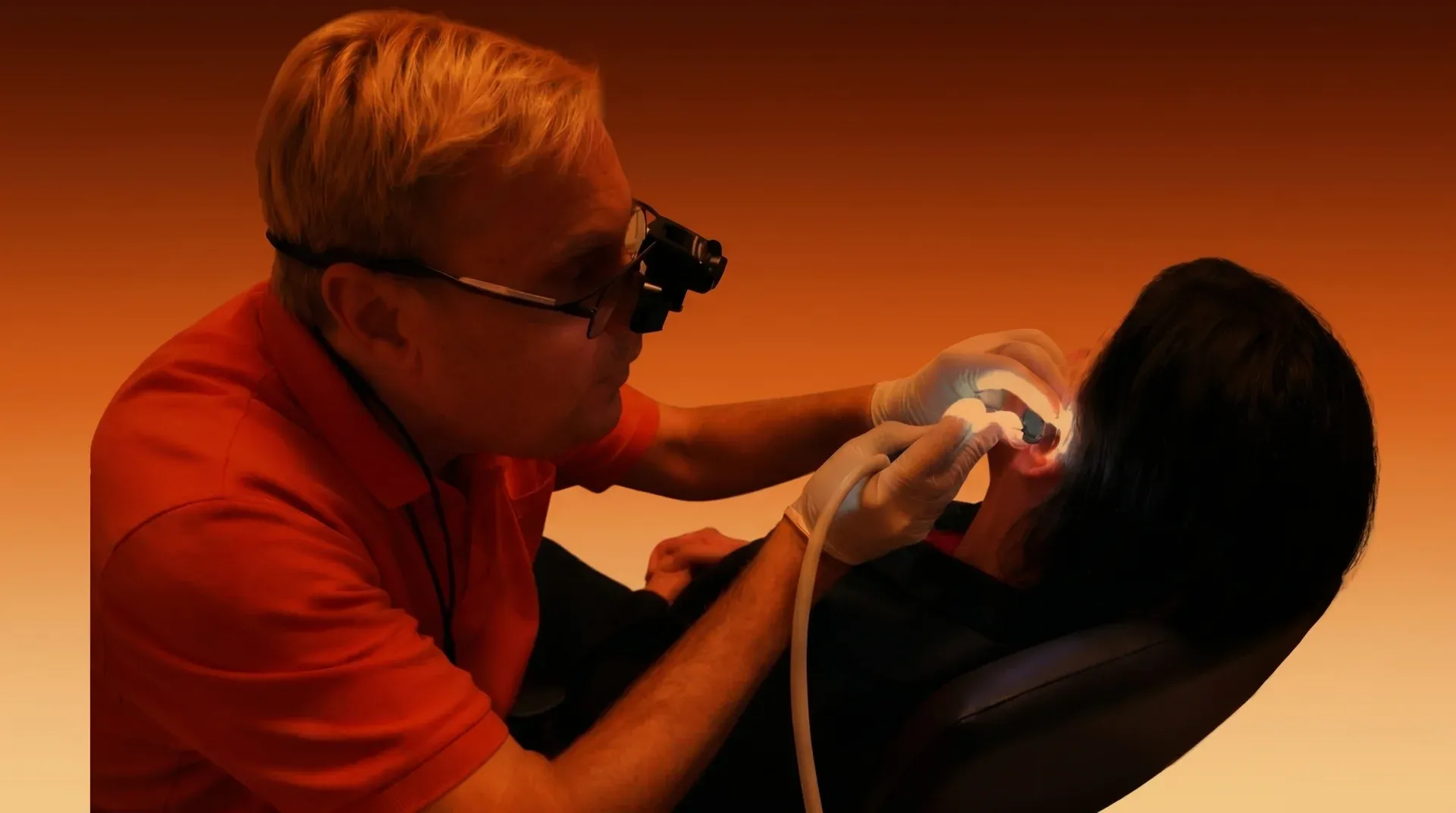
The Audinc hearing test is a professional audiometric test at your own location. We set up a mobile test studio and test each employee in about 15 minutes. Results are discussed one-on-one right away, and you receive a clear report — ideal within periodic health screenings or as a recurring check for noisy work.
Beginning hearing damage becomes visible before it turns irreversible — so you can act in time.
About 15 minutes per employee, on a schedule at your location — the workday simply continues.
We test in the mobile studio at your site and fit custom earplugs on the spot where needed.
Request a quote; we schedule the test day and draw up the testing roster for your team together.
Each employee takes a professional ±15-minute hearing test in the mobile test studio.
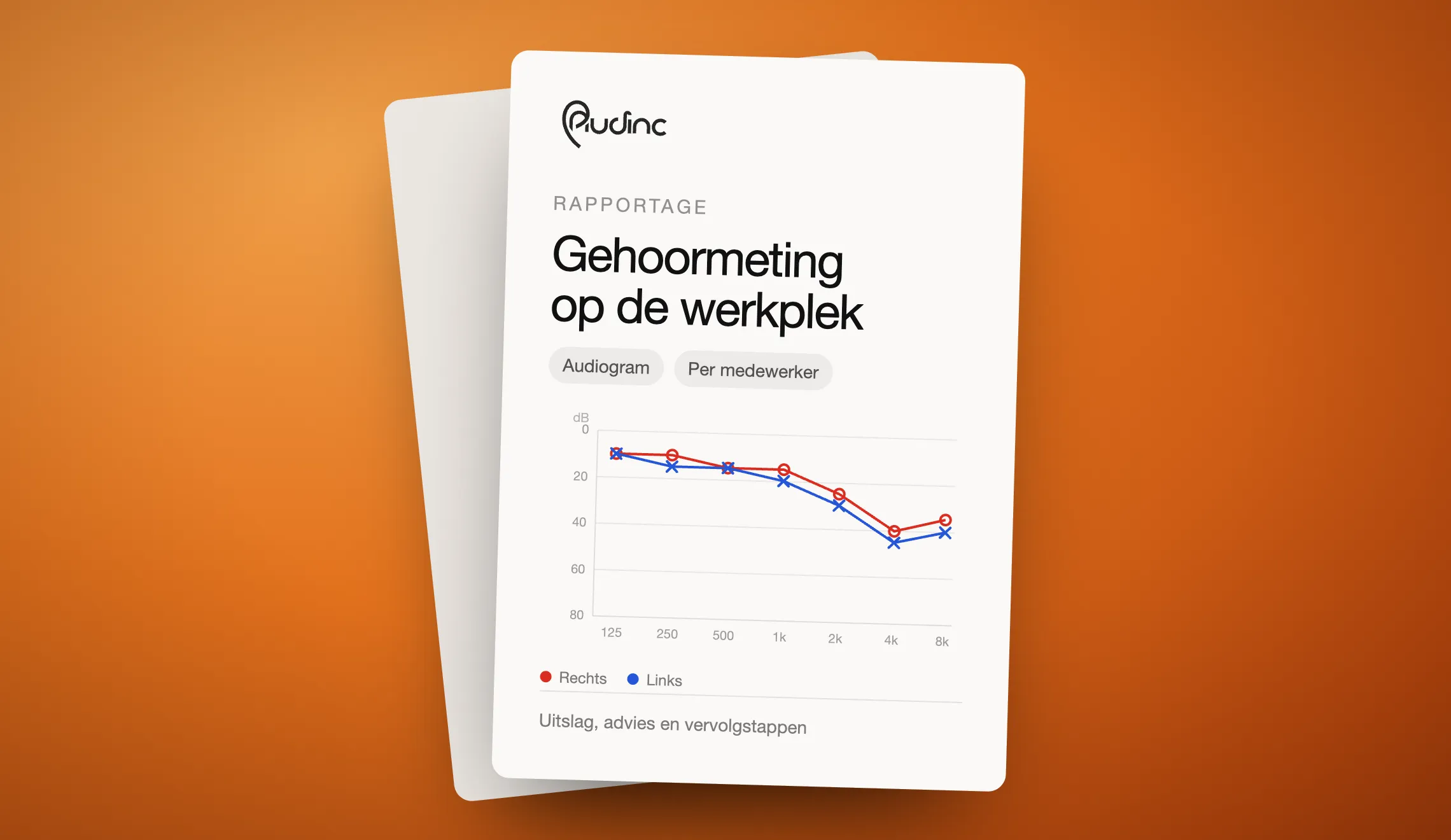
Results are discussed immediately; you receive a report with the outcomes and recommendations.
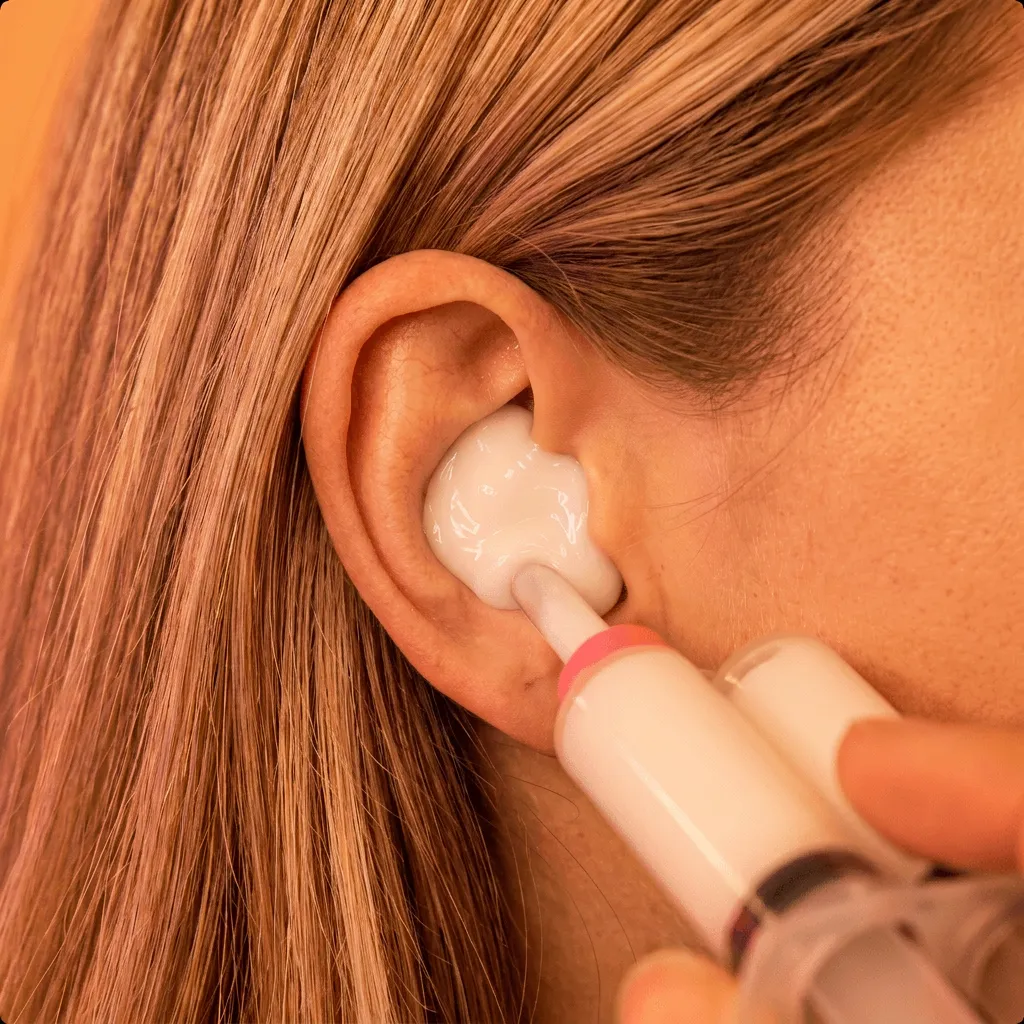
Where needed we fit custom earplugs right away and schedule periodic re-tests.
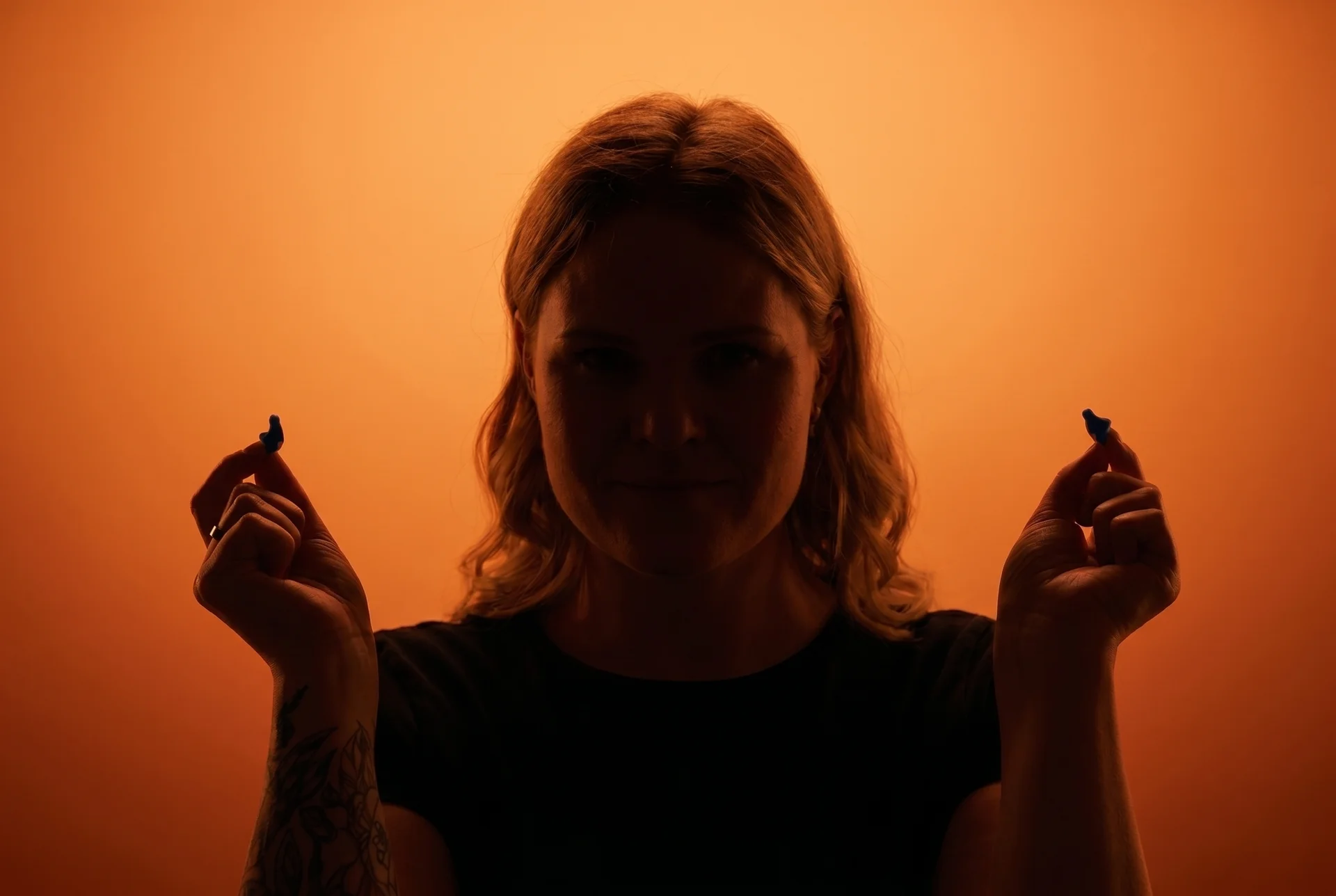
We come to your workplace for a 20-minute session — no travel or lost time for your team.
Covers the obligation to inform staff about noise risks above 80 dB(A).
Clear, easy-to-follow steps your team can apply the same day.
Adjusted to your sector, team size and noise exposure.
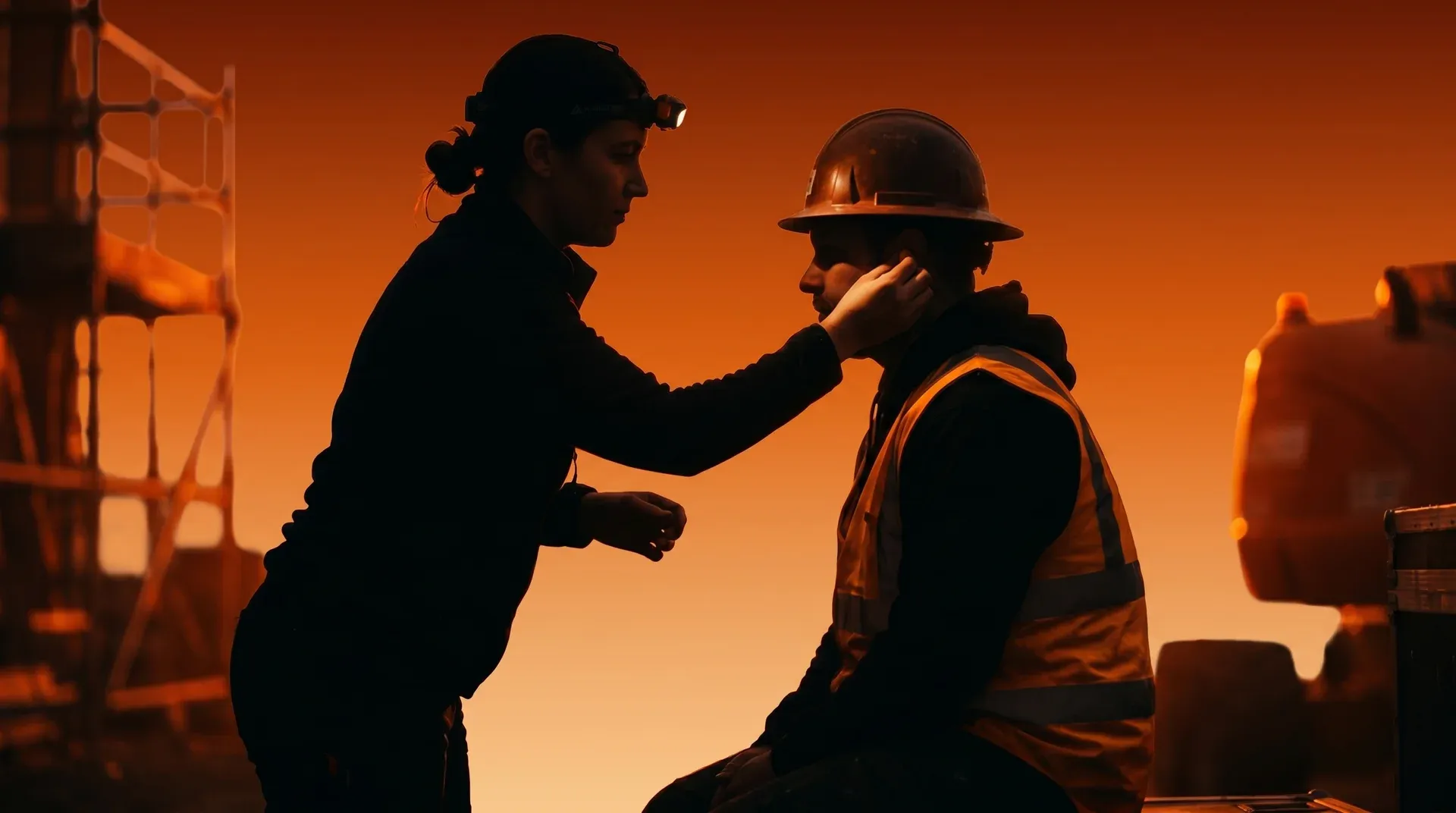
Wherever sustained noise puts hearing at risk, periodic hearing tests are part of good employership.
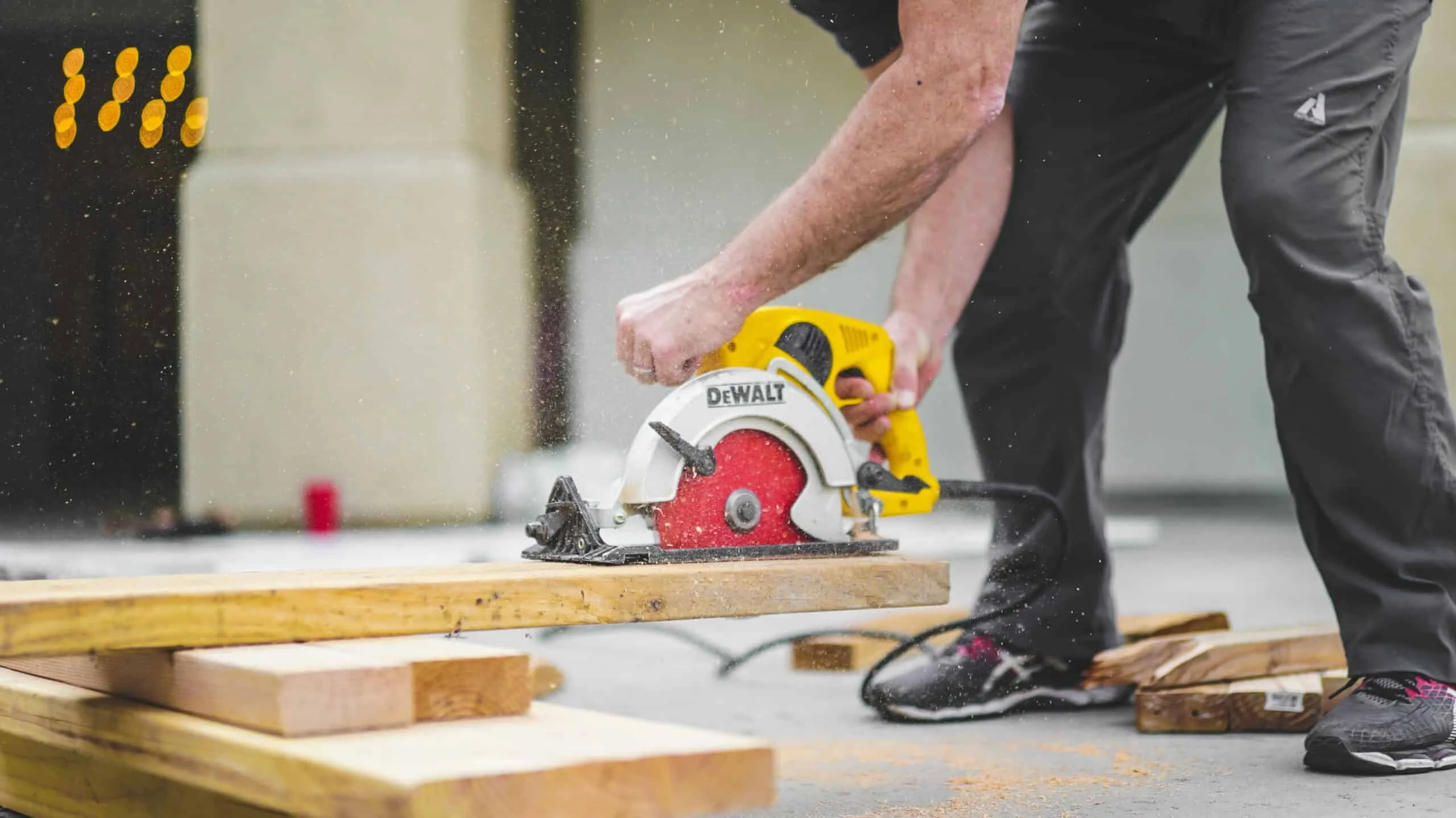
Drills, saws and site machinery — daily exposure that adds up fast.
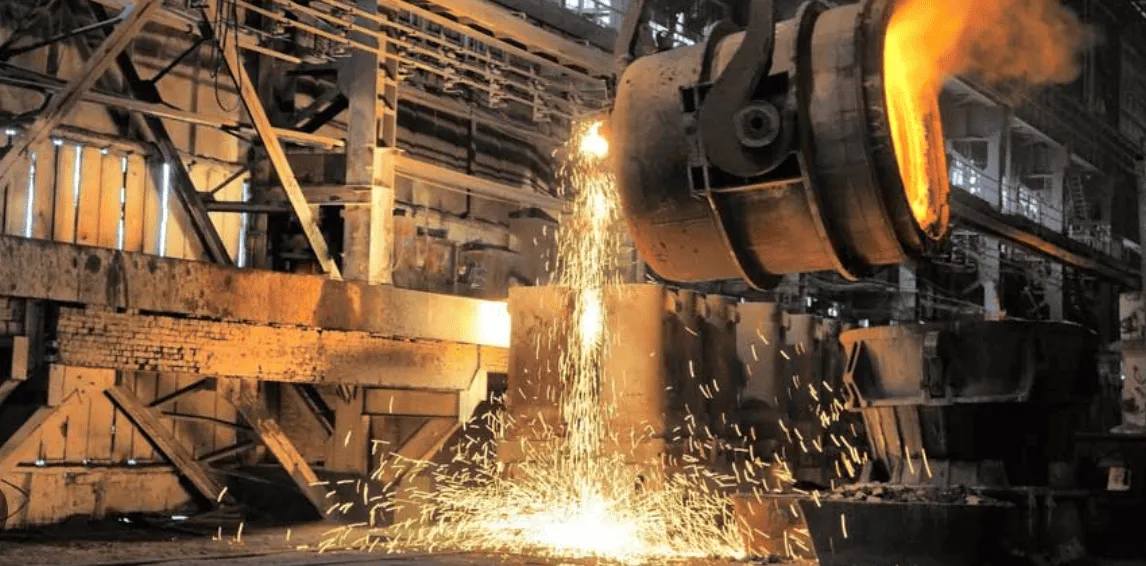
Heavy plant and process lines running at damaging levels for hours.
Tractors, workshops and equipment behind sustained noise on the land.
Road crews, depots and public-works teams working in loud conditions.
Production floors where machinery noise is constant throughout the shift.
Warehouses, loading bays and vehicles in steady, noisy motion.

Everything about the hearing test in one place. See what the test involves, how the test day runs at your location and how it helps you meet your hearing-safety duties. Open any topic below for more detail.

Every test day is tailored to your team size and location, so the final price reflects your situation.


"Good product, before this I had earplugs with speakers sticking out (universal) This is so much better, no pressure points and also all the benefits of a "normal" set of otoplastics. I say do it."
Mark de Vries
Amateur Musician
"My oldest son regularly goes to techno festivals and concerts. I advised him to buy your special music protection. He did and wore at his next festival Toon meer"
Tom Jansen
Student
"After hearing about tinnitus in the news, I wanted to prevent any damage. With my Pure Tones earplugs I can go to parties and the pub with peace of mind."
Sanne Visser
Event Photographer
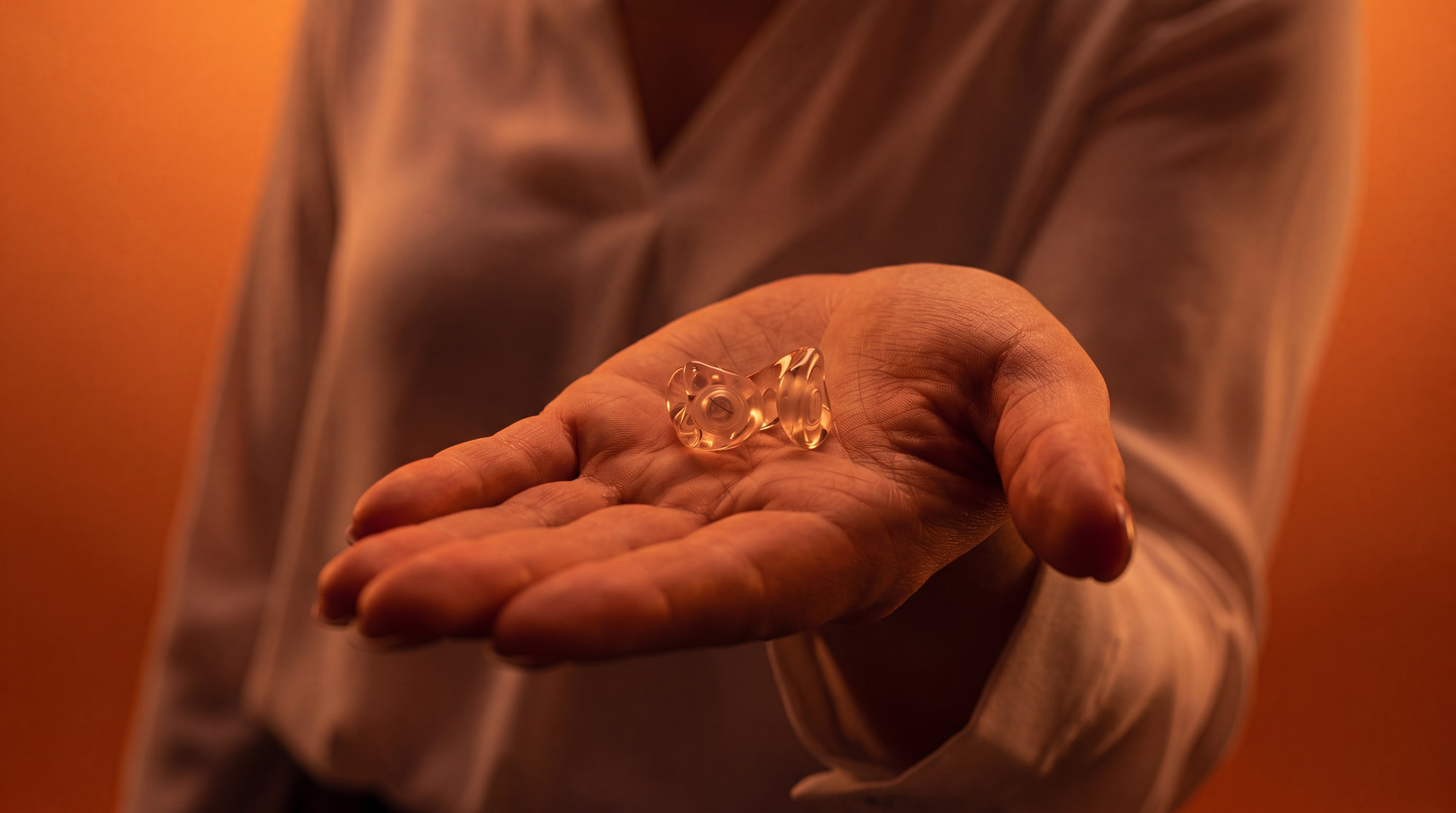
We take a precise impression of each ear on site. The impressions are used to manufacture comfortable earplugs with the right filter for your workplace, followed by a fit check and usage guidance.
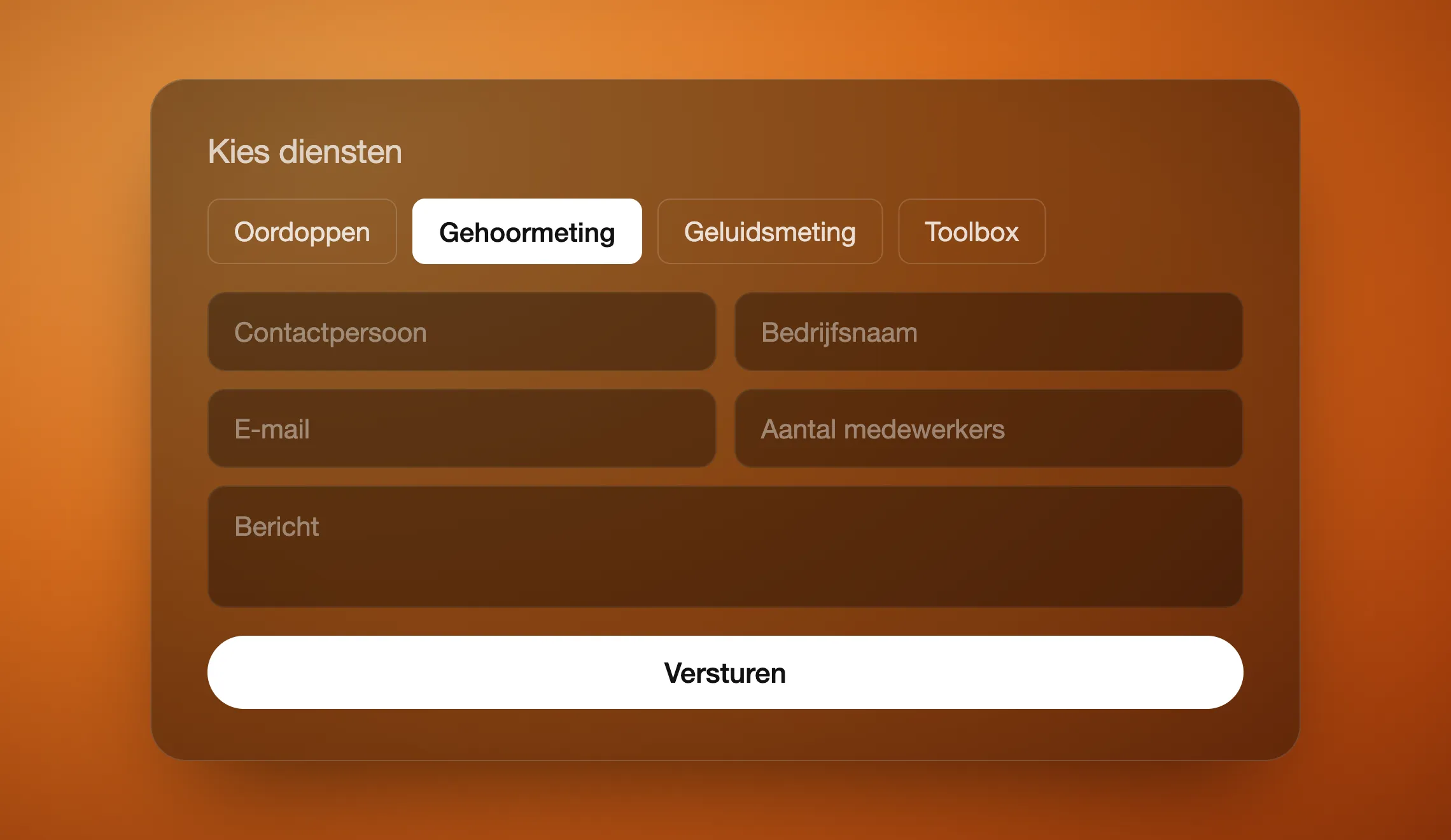
Send us your question or request a call. We will review your workplace, team size, noise exposure, and protection needs, then recommend the most suitable next step.
Cookies on this site
Necessary cookies keep the site working. With your permission we also measure how the site is used and how our campaigns perform. You can change your choice at any time. Read our privacy statement
Cookie preferences
Choose which cookies we may place. Necessary cookies always stay on — without them the site, the shopping cart and booking an appointment do not work.
Necessary
Always onNeeded for the site itself: your language, the shopping cart and form security. No tracking.
Anonymous figures about pages, devices and visitor numbers, so we can improve the site.
Measures which ad led to an appointment or order, and makes relevant advertising possible.