





Advice based on our own product information and knowledge base, not medical advice.
Are Earplugs Bad for Your Ears?
Are earplugs bad for your ears? Not with normal use. Learn how ear infections, ear pain, earwax build-up and hearing damage come about, and what to do if you sleep with earplugs every night.
Take the next step for your hearing
Are earplugs bad for your ears? No, not with normal use. Clean earplugs that fit well actually protect your ears. Problems mainly arise when plugs are dirty, fit poorly or when you use earbuds to listen to loud music for a long time. Below you can read, complaint by complaint, what is going on and how to prevent it.
In short
- Ear infection: mainly caused by dirty plugs and a warm, moist ear canal. Keeping them clean and dry helps.
- Ear pain and pressure points: almost always a question of fit.
- Earwax: wearing them daily slows its natural flow. You soften a blocked ear with lukewarm water.
- Hearing damage does not come from the plug, but from the volume of your earbuds.
Ear infections from earplugs
Under an earplug, the skin of your ear canal gets warm and moist. Add the earwax, sweat and dust on your plugs, and therefore bacteria. If you are prone to ear infections, this can trigger an infection of the ear canal. Dutch GP guidance (Thuisarts) lists earplugs and hearing aids among the causes.
How to reduce the risk:
- Clean your earplugs regularly and let them dry completely before you put them back in. How to do this for each type is explained in how to clean earplugs.
- Do not put them in while your ears are still wet from showering or swimming.
- Let your ears breathe in between, especially if you wear them all day.
- Do not share your earplugs with others.
- Do not use harsh cleaning products. They can irritate the skin in your ear canal and damage the plugs.
Replace foam earplugs and other plugs that are hard to clean after a few uses. Custom earplugs are easy to clean; which material suits you is explained in hard or soft custom earplugs.
Ear pain and pressure points from earplugs
Do your ears hurt after wearing earplugs? Then they usually do not fit well. A universal plug is too big or too hard for your ear canal, or you have twisted it in too deep. It then presses on one spot, and you feel that after a few hours. Many people find standard foam earplugs uncomfortable to wear for long periods. If you have a sensitive or unusually shaped ear canal, even a softer universal plug can cause problems.
First try a different size or material. Is a plug stuck or too deep? Then read earplug stuck or too deep in your ear.
With custom earplugs, the chance of pressure points is smallest, because they follow the exact shape of your ear canal. Even so, with sensitive ears something may not feel right. That is why Audinc offers a comfort guarantee: if you have problems with the fit or wearing comfort within 6 months of purchase, we adjust your earplugs free of charge. If an adjustment is not enough, we look at whether a new impression is needed. What exactly is covered and how to report a problem, you can read in what Audinc’s comfort guarantee entails.
More earwax from earplugs?
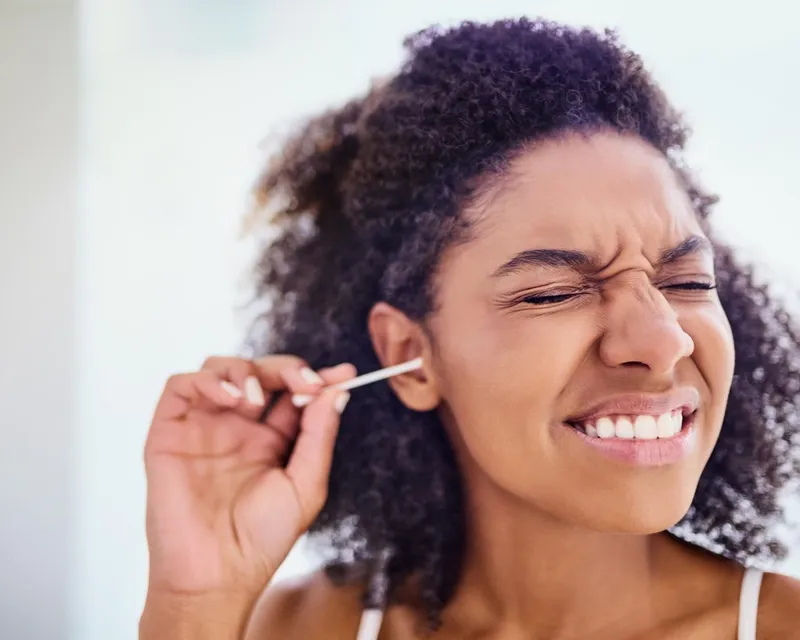
Earwax normally moves outwards by itself as you chew and talk. An earplug holds it back and can push the earwax a little deeper when you put it in. If you wear earplugs, earbuds or a hearing aid every day, earwax therefore builds up faster. You notice it as a muffled or blocked ear.
Is your ear blocked by earwax? Then spray or drop lukewarm water into your ear for 5 days; that softens it. This follows Dutch GP guidance; your own doctor can advise you on the rules and options in your country. Do not use cotton buds. How such a plug forms and what else you can do is explained in earwax blockage: causes and symptoms. If you get plugs more often, you can have your earwax removed at one of our Dutch locations.
Sleeping with earplugs every night: is that bad?
For most people it is not. Many people sleep with earplugs every night for years, for example next to a snoring partner. Do pay attention to three things:
- Hygiene. You wear them for hours on end in a warm ear canal. So clean them more often than earplugs you only wear now and then.
- Earwax. Daily wear is exactly when it can build up. If your ear blocks more often, have your ears checked.
- Fit. You mainly feel a plug that presses when you lie on your side. A flat plug that does not stick out is the most comfortable then.
Also make sure you can still hear your alarm clock, a crying baby or a smoke alarm. What earplugs can and cannot do against snoring is explained in earplugs for snoring. If you sleep with earplugs every night, custom sleeping earplugs are often more comfortable than foam plugs.
Too much volume: that is where the real risk lies
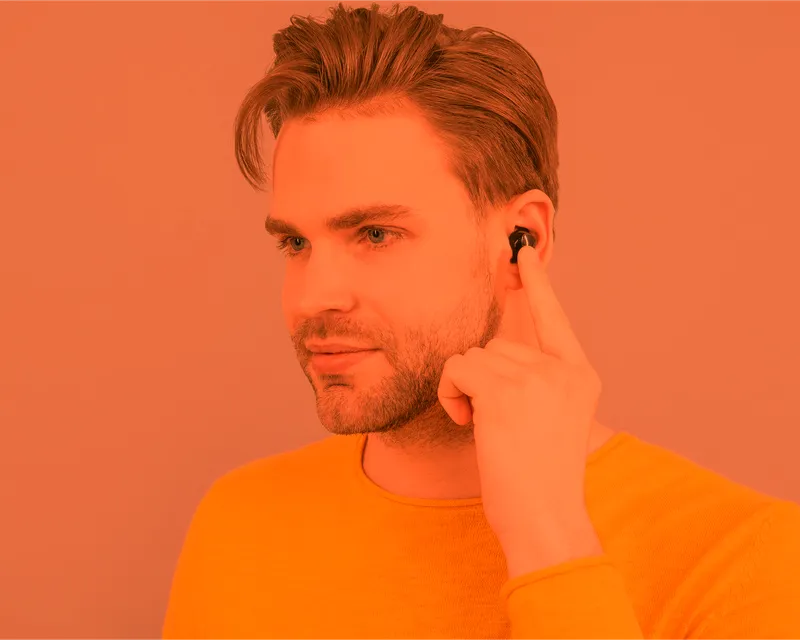
Earplugs themselves are not dangerous, but the sound that earbuds produce can be. If you listen to loud music for a long time, the hair cells in your cochlea can be damaged. They do not grow back. The result can be hearing loss or tinnitus. The WHO advises keeping the volume below 60 per cent of the maximum and giving your ears regular rest.
Custom hearing protection does not produce any sound, so this does not apply. The exception is earplugs with Bluetooth, which you use for calls and music. Because Bluetooth earplugs reduce the ambient noise, you do not need to turn the volume up as high to hear your music.
Product finder
Which earplugs suit you?
Two questions, and you’ll see which earplug we would recommend.
What do you need hearing protection for?
Music and going out
How do you want to hear the music?
Sleep
What do you mainly want to keep out?
Work
What kind of noise do you have at work?
DIY
What do you mostly use for DIY?
Motorcycling
What matters most to you under your helmet?
Swimming and surfing
What do you want in the water?
Shooting and hunting
Do you want to keep hearing ambient sound and conversations?
Two-way radio and security
Do you also work in loud noise?
Our advice
Custom Music
€128.95
SNR 17–31 dB (Click up to 34)
A tube filter that makes music sound a little warmer, in several strengths.
At your appointment you choose the material: soft silicone is the most comfortable for long wear and under a helmet, hard acrylic lasts longer and is easy to put in.
Our advice
Custom Pure Tones
€159.95
SNR 10–23 dB (Click 28)
A flat filter that attenuates low, mid and high tones almost equally: the music stays balanced.
Our advice
In-ear monitoring
from €539.95
Isolation up to 35 dB
Your own monitor mix in your ears, with the seal of a custom earplug.
Our advice
Custom SleepzZ
€119.95
Maximum attenuation, no filter
Soft silicone and no filter, as quiet as possible. Comfortable for side sleepers too.
Our advice
Custom Work
€106.57 excl. VAT
SNR 17–31 dB (Click up to 34)
A work filter that attenuates noise while you can still understand your colleagues.
At your appointment you choose the material: soft silicone is the most comfortable for long wear and under a helmet, hard acrylic lasts longer and is easy to put in.
Our advice
Custom Impulse Work
€128.06 excl. VAT
SNR 21 dB, peak up to 34 dB
Attenuates constantly and extra hard on bangs, so you can talk normally in between.
Our advice
Custom Porto Protect
€149.00
Radio on one side, attenuation on both sides
Both ears are protected against noise and you hear your radio clearly.
At your appointment you choose the material: soft silicone is the most comfortable for long wear and under a helmet, hard acrylic lasts longer and is easy to put in.
Our advice
Custom Porto
€99.00
Ear stays open
A custom earpiece for your two-way radio that stays in place for your whole shift.
At your appointment you choose the material: soft silicone is the most comfortable for long wear and under a helmet, hard acrylic lasts longer and is easy to put in.
Our advice
Custom Hobby
€128.95
SNR 17–31 dB (Click up to 34)
Attenuates the noise of power tools while you still hear what is going on around you.
At your appointment you choose the material: soft silicone is the most comfortable for long wear and under a helmet, hard acrylic lasts longer and is easy to put in.
Our advice
Custom Impulse
€154.95
SNR 21 dB, peak up to 34 dB
An impulse filter that attenuates harder the louder the bang.
Our advice
Custom Motor
€128.95
SNR 17–34 dB (choice of filter)
Attenuates wind noise while you keep hearing the traffic around you.
At your appointment you choose the material: soft silicone is the most comfortable for long wear and under a helmet, hard acrylic lasts longer and is easy to put in.
Our advice
Custom Pure Tones Motor
€159.95
SNR 10–23 dB (Click 28)
With a flat filter: everything gets quieter but still sounds the way it is.
Our advice
Dry Ears
€119.95
Water filter (SNR 5 dB)
Keeps water out while you can still hear the lifeguard or your coach.
Our advice
Dry Music
€229.00
Waterproof MP3 player (8 GB)
Custom swimming earplugs with a built-in waterproof MP3 player and 16 hours of playtime.
Our advice
Cens
€929.00
Active: shots are attenuated automatically
Electronic: amplifies ambient sound and conversations, and attenuates shots automatically.
When should you stop and see your GP?
Please note
Stop wearing your earplugs and see your GP if you have ear pain that does not go away, if fluid or pus comes from your ear, or if the itching persists. Call your GP or the out-of-hours doctor service straight away if you have a fever and feel ill, if your outer ear is red and swollen or if you suddenly hear much worse. In an emergency, call 112.

Got a question? We're all ears.
Frequently Asked Questions
Read MoreFAQ
Yes, they can. Under an earplug the skin of your ear canal gets warm and moist, and dirty plugs bring bacteria with them. That increases the chance of an infection of the ear canal. You reduce that risk by keeping your plugs clean and dry, not sharing them and letting your ears breathe in between.
For most people it is not, as long as the earplugs fit well and are clean. Do keep an eye on earwax: earplugs hold back its natural flow. If your ear blocks more often, or you get itching or pain, have your ears checked. Also make sure you can still hear your alarm clock or a smoke alarm.
Earplugs hold back earwax that would normally move out by itself, and they can push it a little deeper. As a result it builds up faster, especially if you wear them every day. If your ear is blocked, soften the earwax with lukewarm water for 5 days.
Usually they do not fit well: too big, too hard or twisted in too deep. That creates pressure points in the ear canal. Try a different size or material. Custom earplugs follow the shape of your ear canal, so they do not press. If the pain continues, or fluid comes from your ear, see your GP.
Earbuds themselves do not, but the volume can. If you listen loud and long, the hair cells in your cochlea can be damaged. That leads to hearing loss or tinnitus. The WHO advises keeping the volume below 60 per cent of the maximum and taking regular breaks.