



Advice based on our own product information and knowledge base, not medical advice.
Industrial Hearing Protection: Metal, Food, Printing and Workshops
Which hearing protection suits metalworking, the food industry, a printing works or a workshop? The noise, the right filter and what the law requires, sector by sector.
Take the next step for your hearing
In industry, machines often run all day. Presses, grinders, compressors and production lines together create a noise level that quickly goes above 80 dB(A). Anyone who works there day in, day out without good protection risks permanent hearing loss or tinnitus.
Which hearing protection works best varies by sector. In metalworking you deal with loud impacts, in the food industry hygiene rules come into play too, and in a printing works it’s mainly the monotonous sound of the presses. Below you’ll find what to look out for in each sector.
In short
- From 80 dB(A) the employer makes hearing protection available, from 85 dB(A) wearing it is mandatory.
- Choose attenuation that matches the noise: enough to work safely, not so much that you miss colleagues and signals.
- For loud impacts an impulse filter works, for constant machine noise a fixed filter.
- Hearing protection that's comfortable gets worn all day. That's where the biggest gain is.
On-site fittings · from 3 people we come to your company, with advice per role and volume pricing for groups.
Request a quoteWhy hearing protection matters so much in industry
Excessive noise damages the hair cells in your inner ear. That happens gradually and cannot be repaired. Your hearing gets steadily worse, especially in busy situations, and you can end up with a ringing or hissing that doesn’t go away.
Noise also does more than you realise. A full day in a racket can lead to higher blood pressure, difficulty concentrating, stress and fatigue. That’s why employers have to take measures, and above certain noise levels it’s a legal requirement.
In short, what the EU Noise Directive (Directive 2003/10/EC) requires:
| Daily dose | What has to happen |
|---|---|
| 80 dB(A) | The employer makes hearing protection available and provides information and training. |
| 85 dB(A) | Wearing it is mandatory, and the employer draws up a plan to reduce the noise. |
| 87 dB(A) | Limit value in the ear, with the hearing protection in. It must never go above this. |
These are the EU minimum rules (Directive 2003/10/EC). Every EU country has written them into its own law, and some countries are stricter, so check your national rules. The directive does not prescribe a brand or type. The hearing protectors must, however, be suitable and properly fitted, and employees or their representatives, such as a works council, must be consulted on which ones are chosen (Articles 6 and 9). The peak values, your right to a hearing test and who pays for what are explained in when is hearing protection mandatory.
Hearing protection in the metal industry
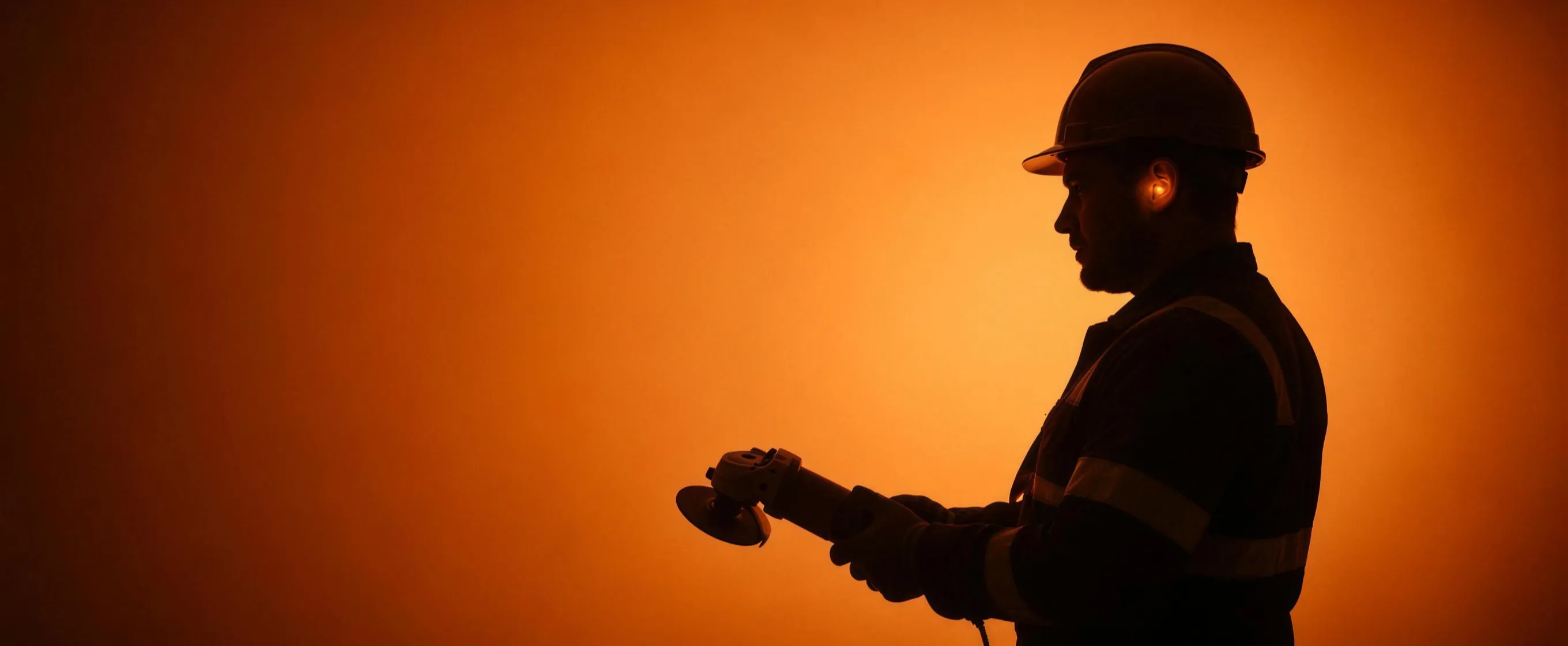
In metalworking, the noise comes from two directions. There is constant machine noise, from lathes, presses and compressors, and there are loud impacts from hammering, straightening, riveting and sheet-metal work. Grinding and sawing are among the loudest jobs: an angle grinder reaches 95 to 105 dB(A).
For constant machine noise, a fixed filter is enough. With lots of loud impacts, an impulse filter is a good choice: it attenuates a fixed amount and adds extra attenuation as soon as there’s a bang.
If you only occasionally go above 80 dB(A), for example when you spend time at the grinding bench once a week, disposable earplugs or earmuffs are often enough. If you work in the noise every day, custom hearing protection pays off: it stays comfortable for the whole shift, seals the same way every time and you don’t have to keep twisting it back into place.
Hearing protection in the food industry
The food industry can be loud too. Think of packing and filling lines, conveyor belts, bottles and cans knocking together, compressors and refrigeration plants. Because the noise often lasts the whole shift, it’s important that the hearing protection is still comfortable after hours of wear.
Hygiene requirements count as well. In an environment with food safety rules (HACCP), hearing protection must be easy to keep clean and must not end up in the product. Loose foam earplugs lying around, or put back in by someone after a meal, don’t fit well there. Custom earplugs are personal, have a smooth finish and are easy to clean with lukewarm water. Read how best to do that in cleaning earplugs.
Tip
Does your hygiene plan set requirements for the colour or detectability of everything that goes onto the production floor? Mention it in your quote request, and we'll work out together which version fits.
Hearing protection in printing works
In printing works, equipment often runs all day, with the monotonous sound of presses, folding machines and cutters. Precisely because the noise is so steady, people get used to it and underestimate it. Yet every shift counts towards the daily dose.
A filter with fairly flat attenuation works well here, such as the one in the Pure Tones Work: the noise goes down, while conversations and signals stay clear. That way colleagues can keep talking to each other without taking their earplugs out. It’s also safer: anyone who is completely shut off misses warnings and takes the earplugs out sooner.
Not everyone in a printing works stands equally close to the presses. Someone who works next to the press all day often needs more attenuation than a colleague in finishing. A sound measurement shows how loud it is at each workstation, so everyone gets the filter that suits their spot. You also choose between hard and soft material; you can read about the difference in hard or soft custom earplugs.
Hearing protection in the workshop
In a workshop, noise levels rise quickly. Running machines, compressors and electric or pneumatic tools often go well above 80 dB(A). A few examples from the noise factsheet by Volandis, the Dutch construction industry’s health and safety centre (in Dutch):
- Angle grinder: 95–105 dB(A)
- Handheld circular saw: 99–109 dB(A)
- Mobile compressor: 80–106 dB(A) silenced, 95–125 dB(A) unsilenced
A cordless impact wrench isn’t a quiet tool either: manufacturers themselves state a sound pressure of around 97 dB(A) for heavy-duty models. The noise of all those machines adds up, including for colleagues who are only working nearby.
In a workshop in particular, the risk is often underestimated because the tools only run for short periods. Yet short jobs count too. Every 3 dB(A) more halves the safe exposure time: at 95 dB(A), after about a quarter of an hour you have already taken in the daily dose that takes eight hours at 80 dB(A).
With the right filter, custom earplugs attenuate enough for grinding and sawing, while you still hear your colleagues and warning signals. That’s a different type of earplug from the ones for festivals. And because they fit exactly, they stay comfortable all working day. Then they actually get worn.
Which earplugs suit which noise?
We make industrial hearing protection from an impression of each employee’s ear. You choose between hard acrylic and soft silicone, both with an anti-allergy coating. The filter determines the attenuation:
Constant machine noise
The Custom Work attenuates with an SNR of 17 to 31 dB, depending on filter and material. With the Click filter you click it shut for up to 34 dB, handy if you occasionally stand next to a louder machine.
Loud impacts and bangs
The Custom Impulse Work attenuates constantly at SNR 21 dB and up to 34 dB on loud peaks. Between the impacts you still hear your surroundings well.
Lots of talking
The Pure Tones Work has a flat filter that attenuates low, mid and high tones almost equally (SNR 10–23 dB, up to 28 with Click). Voices sound natural and conversations stay clear, even with machine noise.
The attenuation you need depends on the noise at the workplace. With a sound measurement we map it per workstation and advise which filter suits each role. You’ll find all the options on hearing protection for work.
Product finder
Which earplugs suit you?
Two questions, and you’ll see which earplug we would recommend.
What do you need hearing protection for?
Music and going out
How do you want to hear the music?
Sleep
What do you mainly want to keep out?
Work
What kind of noise do you have at work?
DIY
What do you mostly use for DIY?
Motorcycling
What matters most to you under your helmet?
Swimming and surfing
What do you want in the water?
Shooting and hunting
Do you want to keep hearing ambient sound and conversations?
Two-way radio and security
Do you also work in loud noise?
Our advice
Custom Music
€128.95
SNR 17–31 dB (Click up to 34)
A tube filter that makes music sound a little warmer, in several strengths.
At your appointment you choose the material: soft silicone is the most comfortable for long wear and under a helmet, hard acrylic lasts longer and is easy to put in.
Our advice
Custom Pure Tones
€159.95
SNR 10–23 dB (Click 28)
A flat filter that attenuates low, mid and high tones almost equally: the music stays balanced.
Our advice
In-ear monitoring
from €539.95
Isolation up to 35 dB
Your own monitor mix in your ears, with the seal of a custom earplug.
Our advice
Custom SleepzZ
€119.95
Maximum attenuation, no filter
Soft silicone and no filter, as quiet as possible. Comfortable for side sleepers too.
Our advice
Custom Work
€106.57 excl. VAT
SNR 17–31 dB (Click up to 34)
A work filter that attenuates noise while you can still understand your colleagues.
At your appointment you choose the material: soft silicone is the most comfortable for long wear and under a helmet, hard acrylic lasts longer and is easy to put in.
Our advice
Custom Impulse Work
€128.06 excl. VAT
SNR 21 dB, peak up to 34 dB
Attenuates constantly and extra hard on bangs, so you can talk normally in between.
Our advice
Custom Porto Protect
€149.00
Radio on one side, attenuation on both sides
Both ears are protected against noise and you hear your radio clearly.
At your appointment you choose the material: soft silicone is the most comfortable for long wear and under a helmet, hard acrylic lasts longer and is easy to put in.
Our advice
Custom Porto
€99.00
Ear stays open
A custom earpiece for your two-way radio that stays in place for your whole shift.
At your appointment you choose the material: soft silicone is the most comfortable for long wear and under a helmet, hard acrylic lasts longer and is easy to put in.
Our advice
Custom Hobby
€128.95
SNR 17–31 dB (Click up to 34)
Attenuates the noise of power tools while you still hear what is going on around you.
At your appointment you choose the material: soft silicone is the most comfortable for long wear and under a helmet, hard acrylic lasts longer and is easy to put in.
Our advice
Custom Impulse
€154.95
SNR 21 dB, peak up to 34 dB
An impulse filter that attenuates harder the louder the bang.
Our advice
Custom Motor
€128.95
SNR 17–34 dB (choice of filter)
Attenuates wind noise while you keep hearing the traffic around you.
At your appointment you choose the material: soft silicone is the most comfortable for long wear and under a helmet, hard acrylic lasts longer and is easy to put in.
Our advice
Custom Pure Tones Motor
€159.95
SNR 10–23 dB (Click 28)
With a flat filter: everything gets quieter but still sounds the way it is.
Our advice
Dry Ears
€119.95
Water filter (SNR 5 dB)
Keeps water out while you can still hear the lifeguard or your coach.
Our advice
Dry Music
€229.00
Waterproof MP3 player (8 GB)
Custom swimming earplugs with a built-in waterproof MP3 player and 16 hours of playtime.
Our advice
Cens
€929.00
Active: shots are attenuated automatically
Electronic: amplifies ambient sound and conversations, and attenuates shots automatically.
On-site fittings
From 3 people, we come to your company, right there in the workshop or factory hall. Contact us for on-site fittings in your country. We advise which filter suits each role, and for groups we work with volume pricing: the more employees, the lower the price per person. We can combine this with hearing tests on site and a toolbox session in which employees learn why and how to protect their hearing. When the earplugs are first used, we check with a leak test that they seal properly; after that, we recommend repeating that check every year.
On-site fittings · from 3 peopleWe come to your companyTell us which sector you're in and how many employees are involved. You'll get a quote with advice per role and volume pricing for your group. Request a quote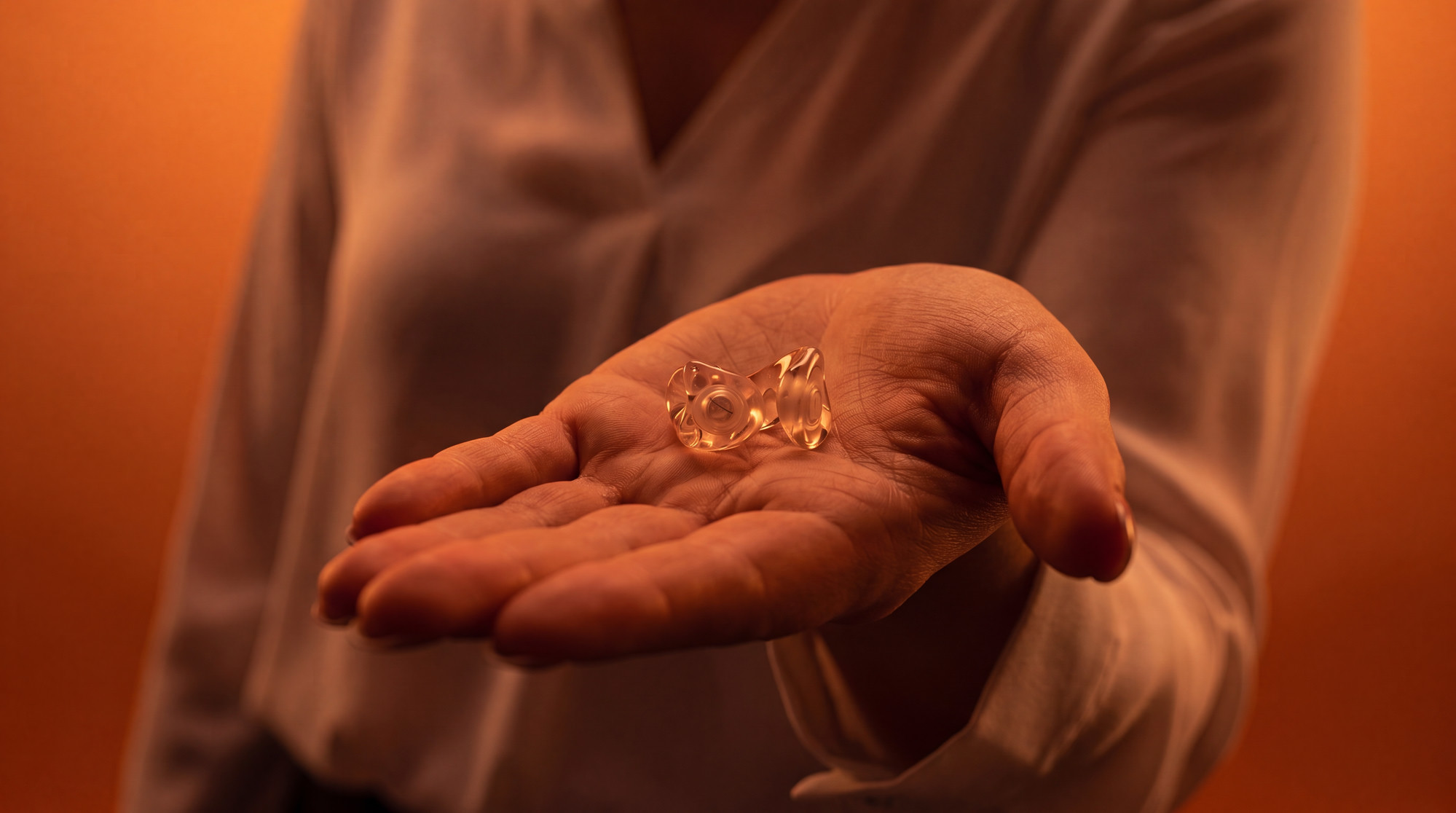
Got a question? We're all ears.
Frequently Asked Questions
Read MoreFAQ
Hearing protection that attenuates enough for the noise at the workplace and is worn all day. Custom earplugs with an interchangeable filter are well suited to this: you choose the attenuation per workplace, while still hearing colleagues and warning signals. The Custom Work attenuates with an SNR of 17 to 31 dB, and up to 34 dB with the Click filter.
From a daily dose of 80 dB(A), the employer must make hearing protection available, and from 85 dB(A) workers must wear it. With the protection in, the noise in the ear must not exceed 87 dB(A). These are the EU minimum rules from Directive 2003/10/EC. Every EU country has written them into its own law, and some are stricter, so check your national rules.
For sudden peak noise, such as hammering, riveting or a nail gun, a filter that attenuates more strongly as the bang gets louder is a good fit. The Custom Impulse Work has a filter like that: constant attenuation of SNR 21 dB and up to 34 dB on loud peaks.
Besides enough attenuation, hygiene counts most. The material must be easy to clean and the earplugs must not end up in the product. Custom earplugs are personal, have a smooth finish and are easy to clean with lukewarm water. When requesting a quote, tell us what your HACCP plan requires.
Yes. From 3 people, we come to your company to take impressions, including in the workshop or factory hall. Contact us for on-site fittings in your country. If you like, we combine it with a sound measurement, hearing tests and a toolbox session. For smaller numbers, the fitting can be done at one of our locations.