





Advice based on our own product information and knowledge base, not medical advice.
Ringing or Hissing in Your Head? How Your Brain Creates Tinnitus
It usually starts in your ear, but the sound itself is created in your brain. Find out step by step how that works, what science really knows about it and what you can do yourself.
Take the next step for your hearing
You are lying in bed, it is quiet, and there it is again: a high-pitched ringing, a soft hiss or a rushing sound in your head. Nobody else can hear it. Yet for you it is very real.
And it is: the sound really is being created, just not in your ear but in your brain. Below you can read how that works, why silence and stress make it stronger and what science does and does not know.
In short
- Tinnitus usually starts with damage in your ear, but the sound itself is created in your brain.
- If your brain receives fewer signals from the ear, it turns up the gain. You hear that extra activity as ringing, hissing or buzzing.
- How much it bothers you depends on your attention and emotion systems. That is why stress and poor sleep make it worse.
- There is no pill for tinnitus. Cognitive behavioural therapy has the strongest evidence; a hearing aid often helps if your hearing is also worse.
Tinnitus is not just in your ear
For a long time, people thought the ringing came from the ear itself. That is only half true. Tinnitus usually arises because fewer signals are coming from the ear, and the brain responds to that.
One strong clue: people whose auditory nerve is cut during an operation often still get tinnitus. The ear is then completely disconnected, but the sound remains. So it must be created further along.
Compare it to an old radio: if the station drops out, you do not hear silence but static. If the signal from your ear gets weaker, your brain starts listening harder and eventually hears its own background noise.
1 in 7
adults worldwide have some form of tinnitus (14 percent on average).
10–15%
of people with tinnitus have a normal hearing test.
9 in 10
people with tinnitus are not much bothered by it, according to Dutch GP guidance.
Step by step: from a damaged ear to ringing in your head
How does a damaged ear turn into a sound in your head? Research in animals and humans shows roughly this route.
- 1Damage in the inner ear. Noise, ageing or an infection damages hair cells in your cochlea, or the connections between hair cells and the auditory nerve. Often the high tones are affected first.
- 2Less input. For those pitches, fewer signals reach your brainstem via the auditory nerve.
- 3The brain turns up the amplifier. The auditory nuclei in your brainstem and the auditory cortex compensate for the weaker signal. Researchers call this central gain. The brake on nerve cells is eased, and the amplification increases.
- 4Nerve cells fire on their own. Even without sound, nerve cells become more active, and they start firing together more often. To your brain, that synchronised activity looks like a real sound.
- 5You hear a sound. Your brain interprets that activity as ringing, hissing or buzzing, often at exactly the pitch where your ear is damaged.
That same extra amplification explains why some people with tinnitus suddenly find ordinary sounds too loud as well. This is called hyperacusis, and it often goes hand in hand with tinnitus.
Bear in mind: these steps have mainly been measured in detail in laboratory animals. In humans, brain scans and hearing tests fit this picture well, but the exact mechanism may differ from person to person.
How tinnitus developsSee and hear it in four stepsFrom sound wave to ringing: an animated explanation with sound. See the explanationWhy you mainly hear it in silence
During the day you may hardly notice your tinnitus, but in bed at night it is there in full force. That is not your imagination.
Real sounds around you give your hearing system something to do. In silence that disappears, and your brain’s own activity stands out. How strong that effect is was shown in an experiment with 78 people with normal hearing: after four minutes in a completely soundproof room, 74 percent of them heard sounds resembling tinnitus. Your brain fills the silence by itself.
What you think
"There is a sound stuck in my ear, and it gets louder in silence."
What really happens
The activity in your brain stays roughly the same. Without sound around you there is nothing else to hear, so the tinnitus stands out more.
That is why many people find it pleasant to put on a soft background sound, such as a fan, quiet music or an open window. It does not take the tinnitus away, but it reduces the contrast. Hear for yourself what sound enrichment does with a short demo.
Why one person is bothered by it and another is not
Two people can hear equally loud ringing, while one simply lives with it and the other cannot sleep because of it. That difference lies in how your brain judges the sound.
In people with tinnitus, researchers see the auditory cortex become more strongly connected to networks for attention and emotion, such as the limbic system. Those networks decide whether a stimulus is important or threatening. A well-known model proposes that parts of the limbic system can normally filter out the tinnitus signal, like noise suppression. If that filter works less well, the sound stays in the foreground.
With stress, anxiety and lack of sleep, those systems are more finely tuned. Your brain is then quicker to label the sound as “important”, you pay more attention to it, and it seems louder. That in turn causes more stress. That is how a vicious circle develops.
The good news: that circle also works the other way round. When your brain learns that the sound is harmless, it moves into the background. This is called habituation, and it is the reason most people with lasting tinnitus are hardly bothered by it after a while.
Tinnitus with normal hearing: hidden hearing loss
A normal hearing test, but still ringing? That is more common than you might think: around 10 to 15 percent of people with tinnitus have a normal audiogram.
One possible explanation is called hidden hearing loss, or in medical terms cochlear synaptopathy. The idea comes from a well-known study in mice from 2009. The mice were exposed to loud noise for two hours. Their hearing thresholds then recovered completely and their hair cells stayed intact. Yet in the high-frequency region, about half of the connections between hair cells and the auditory nerve had disappeared for good.
A standard hearing test only measures the softest tone you can still hear. That damage falls outside it. Hence “hidden”.
Note: how strong is the evidence?
In animals, hidden hearing loss has been convincingly demonstrated. In humans, not yet consistently: a 2011 study found a weaker auditory nerve signal in people with tinnitus and a normal audiogram, but later studies with more closely matched groups did not find that difference again. Research on human ears after death does show that this kind of nerve damage occurs in humans. Whether it explains tinnitus is still an open question.
The practical lesson: ringing after a concert that goes away again does not automatically mean nothing has been damaged. Read more about how many decibels is harmful and how quickly that happens.
Why your jaw and neck play a part
Does your tinnitus change when you clench your teeth or turn your head? For many people it does. Up to two thirds of people with tinnitus can influence the sound this way. This is called somatosensory or somatic tinnitus.
The explanation lies in the brainstem. The first relay station for sound, the dorsal cochlear nucleus, receives signals not only from your ear, but also from your face, jaw and neck. In laboratory animals, those sensory signals are even passed on more strongly in this nucleus after hearing damage. As a result, a jaw or neck muscle can play a part in what you hear.
Try it yourself
Clench your jaw for five seconds, push your chin against your hand or turn your head to the left and right. If the tone clearly changes, tell your GP or ENT doctor (ear, nose and throat doctor), especially if you also clench your jaw or have neck problems.
What this means for treatment
Because tinnitus is an interplay between ear and brain, there is no switch to turn it off. You can, however, learn to be less bothered by it.
- No pill. There is no medicine that reduces tinnitus. If you think a medicine is the cause, discuss it with your doctor.
- Explanation and reassurance. According to the Dutch tinnitus guideline, this is the first step: understanding what is happening makes the sound less threatening.
- Cognitive behavioural therapy (CBT). The best supported. CBT does not make the sound quieter, but it does reduce its impact on your life and your mood. The Dutch guideline recommends it for moderate to severe symptoms, and the multidisciplinary European guideline for tinnitus (Cima et al., 2019) also gives CBT its strongest recommendation.
- A hearing aid for hearing loss. If your hearing is also worse, a trial with hearing aids is the obvious step. More sound from outside gives your brain less reason to amplify by itself.
- Sound enrichment. A soft background sound can be pleasant in everyday life, especially when sleeping. The Dutch guideline does not recommend it as a stand-alone therapy to cure tinnitus.
- New developments. In bimodal neuromodulation you hear sound combined with light stimulation of the skin or tongue, to break up the overly synchronised activity in the dorsal cochlear nucleus. In a small trial with 20 people with somatic tinnitus, the sound became less loud and less disturbing. The research is still limited, and the Dutch guideline does not recommend neuromodulation as a first treatment: interesting research, not a proven solution.
Your own doctor can advise you on the rules and options in your country. Well-known musicians run into this too. Read how Chris Martin and other artists with tinnitus deal with it.
What you can do yourself
- Avoid complete silence. Put on a soft sound in the evening if that helps.
- Work on stress and sleep. Relaxation, exercise and a regular sleep pattern help your brain push the sound into the background.
- Do not give it a leading role. Distraction through work, hobbies or sport helps with habituation. Constantly checking whether it is still there keeps it in the foreground.
- Know what you hear. Take the tinnitus test with real sounds, so you can describe better what you hear.
- Prevent new damage. Every new injury gives your brain extra reason to amplify. Read how to prevent permanent hearing damage.
When to see your GP?
Call your GP straight away (out of hours: the out-of-hours doctor service, or 112 in an emergency) if you suddenly get tinnitus and at the same time go (almost) deaf in one ear. Make an appointment if you only hear the sound on one side, if it pulses with your heartbeat, if it started after a fall or blow to your head, or if it also makes you dizzy, you have a headache or ear pain, or your eyesight gets worse. And of course if it bothers you a lot.
Protect what you still have
Your brain makes the sound, but it usually starts in your ear. That is something you can influence: the less new damage, the less your brain has to compensate. Read how to prevent tinnitus.
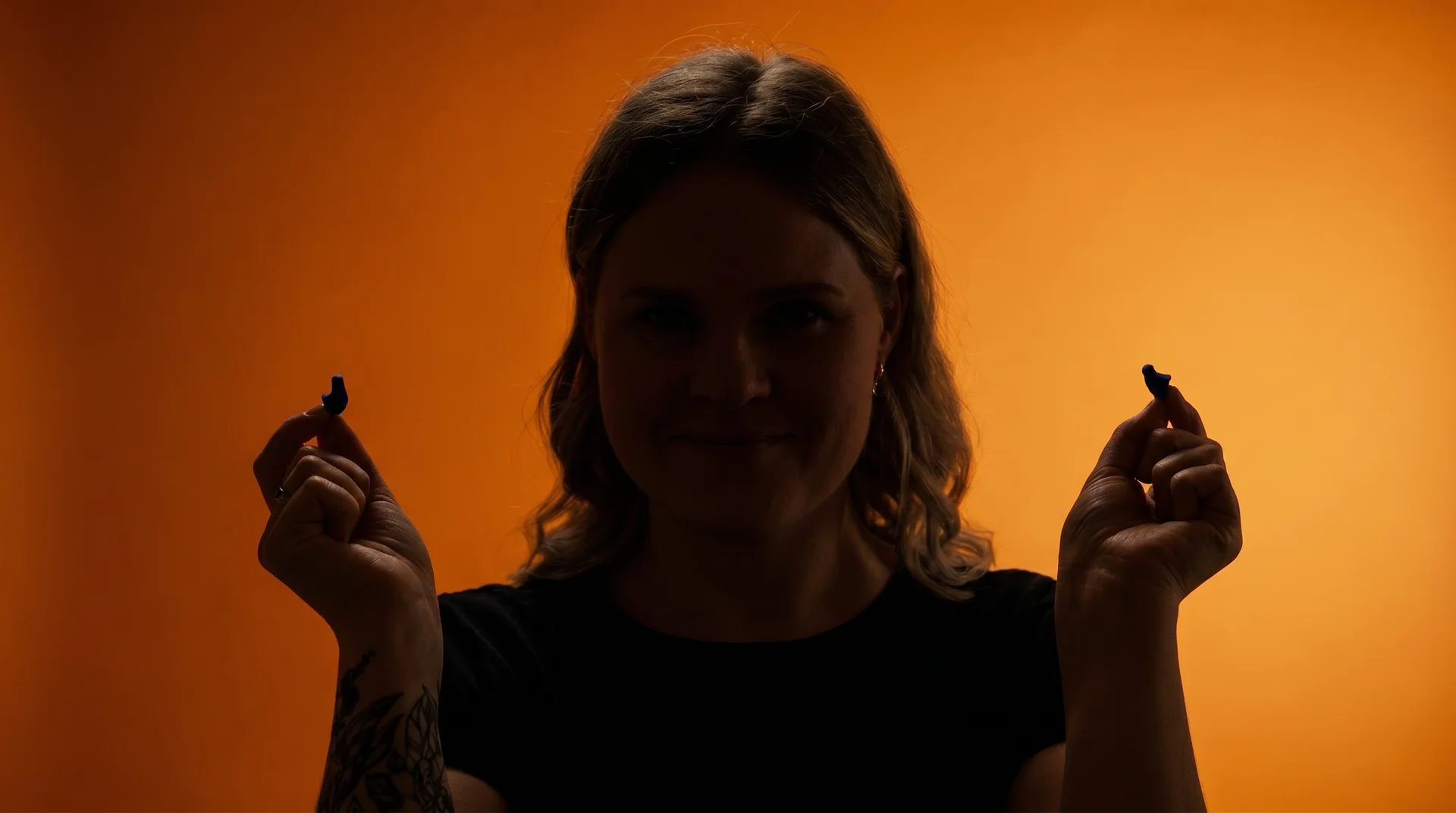
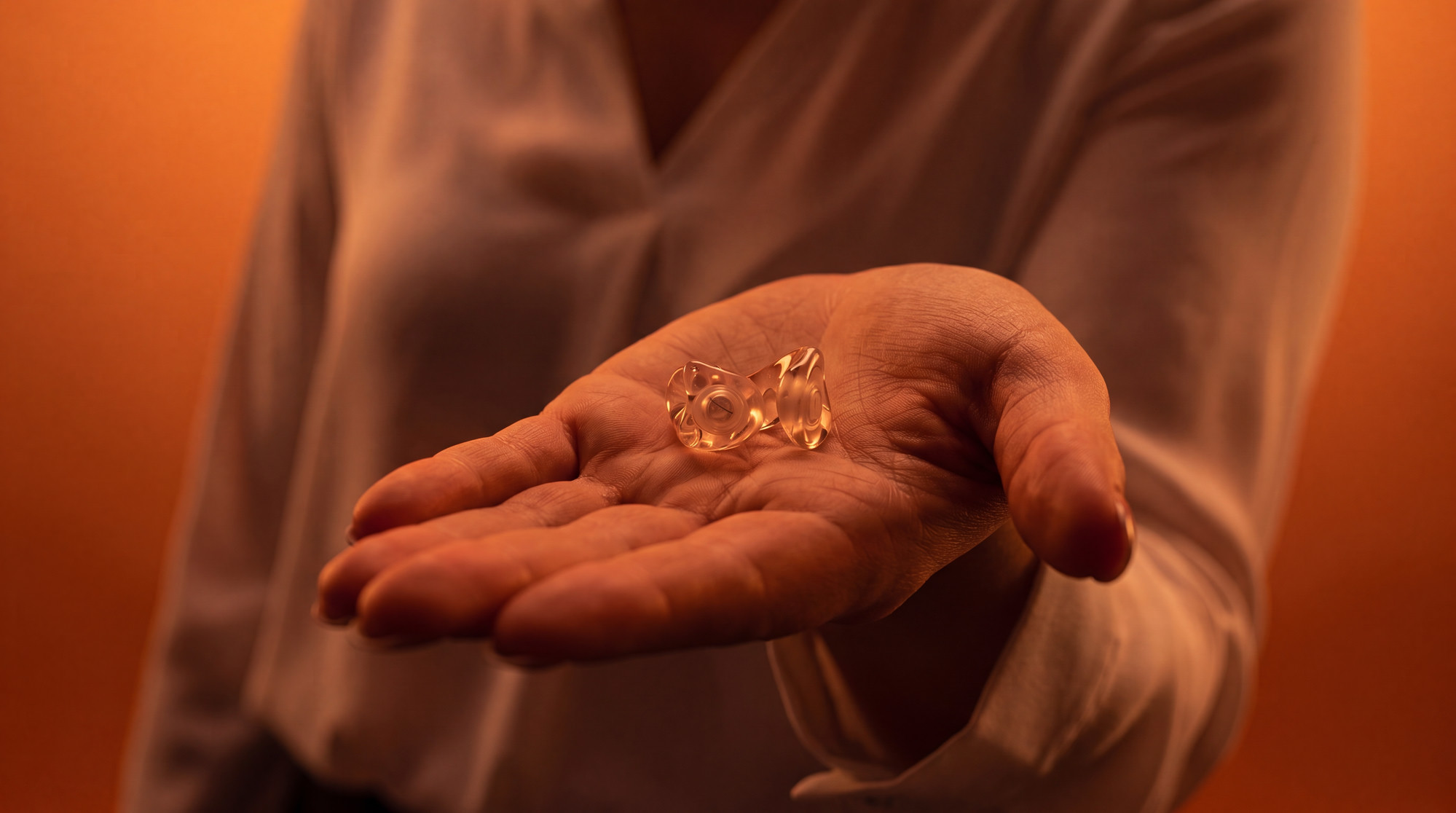
Do you go to concerts or festivals, or work in noise? With custom earplugs we bring the sound down to a safe level, while you still hear music and conversations clearly. That way you protect your ears against new damage, without missing out. Earplugs are not a treatment for tinnitus, but they do help stop it from getting worse.
Sources
- Cima, R.F.F. et al. (2019). A multidisciplinary European guideline for tinnitus: diagnostics, assessment, and treatment. HNO.
- Hersenstichting (Dutch Brain Foundation) – Tinnitus (in Dutch)
- Thuisarts (Dutch GP guidance) – Ik heb last van oorsuizen (in Dutch)
- Richtlijnendatabase – Dutch tinnitus guideline: treatment of patients with tinnitus (in Dutch)
- Richtlijnendatabase – Psychological interventions: CBT for tinnitus symptoms (in Dutch)
- Shore, Roberts & Langguth (2016). Maladaptive plasticity in tinnitus: triggers, mechanisms and treatment. Nature Reviews Neurology.
- Auerbach, Rodrigues & Salvi (2014). Central gain control in tinnitus and hyperacusis. Frontiers in Neurology.
- Rauschecker, Leaver & Mühlau (2010). Tuning out the noise: limbic-auditory interactions in tinnitus. Neuron.
- Jarach et al. (2022). Global prevalence and incidence of tinnitus: a systematic review and meta-analysis. JAMA Neurology.
- Denys et al. (2022). Fear influences phantom sound percepts in an anechoic room. Frontiers in Psychology.
- Kujawa & Liberman (2009). Adding insult to injury: cochlear nerve degeneration after “temporary” noise-induced hearing loss. Journal of Neuroscience.
- Schaette & McAlpine (2011). Tinnitus with a normal audiogram: physiological evidence for hidden hearing loss and computational model. Journal of Neuroscience.
- Guest, Munro & Plack (2017). Tinnitus with a normal audiogram: role of high-frequency sensitivity and reanalysis of brainstem-response measures to avoid audiometric over-matching. Hearing Research.
- Wu et al. (2021). Primary neural degeneration in noise-exposed human cochleas: correlations with outer hair cell loss and word-discrimination scores. Journal of Neuroscience.
- Haider et al. (2017). Pathophysiology, diagnosis and treatment of somatosensory tinnitus: a scoping review. Frontiers in Neuroscience.
- Fuller et al. (2020). Cognitive behavioural therapy for tinnitus. Cochrane Database of Systematic Reviews.
- Marks et al. (2018). Auditory-somatosensory bimodal stimulation desynchronizes brain circuitry to reduce tinnitus in guinea pigs and humans. Science Translational Medicine.
Got a question? We're all ears.
Frequently Asked Questions
Read MoreFAQ
It usually starts with damage in your inner ear, for example from noise or ageing. As a result, fewer signals reach your brain. Your hearing system then turns up the amplifier, as it were, and the nerve cells themselves become more active. You experience that extra activity as ringing, hissing or buzzing that is not there on the outside. Stress, a blocked ear or some medicines can also play a part.
Partly, yes. The sound itself is created in your brain, and the Dutch Brain Foundation (Hersenstichting), for example, counts tinnitus among brain disorders. It is not a brain disease like dementia: in most people it is the brain's response to less input from the ear. So your ear is usually the starting point, and your brain turns it into a sound.
Yes. About 10 to 15 percent of people with tinnitus have a normal hearing test. One possible explanation is hidden hearing loss: damaged connections between hair cells and the auditory nerve that a standard hearing test does not measure. This has been clearly shown in mice, but the evidence in humans is not yet consistent.
Your brain helps decide how important a sound is. When you are stressed or tired, your alarm and attention systems are more finely tuned, so the tinnitus stands out more and seems more disturbing. That is why reducing stress and sleeping well often helps, and why cognitive behavioural therapy is one of the best-researched treatments.
Sometimes it goes away by itself, for example ringing after a concert. If it stays, most people get used to it: according to Dutch GP guidance, 9 out of 10 people with tinnitus are not much bothered by it. There is no pill that takes tinnitus away. Do protect your ears against new damage, so that it does not get worse.