





When Is Hearing Protection Mandatory?

Hearing protection is mandatory above 85 dB(A), but the Dutch Working Conditions Act sets out more rules on when and from how many decibels it applies.
Take the next step for your hearing
It is mandatory for employees to use hearing protection when the average daily exposure exceeds 85 dB(A).
But the Dutch Working Conditions Act (Arbowet) sets out more rules and guidelines on when hearing protection is mandatory.
Above 80 decibels, the warning bells start to ring. Hearing protection may not be mandatory at that point, but it is certainly advisable.
We supply optimal hearing protection with custom earmoulds for noise levels of 80 decibels and up in the workplace.
Hearing protection: more than just mandatory
Too much noise in the workplace has unpleasant consequences for your hearing. Noise-induced hearing loss acquired on the job is, in fact, a common problem. Hearing protection is therefore an effective way to prevent damage to your hearing. What are the consequences for employees when they are exposed to excessive noise, and what rules apply to this kind of noise nuisance under current legislation?
What does the Working Conditions Act say about excessive noise in the workplace?
The Working Conditions Act (Arbeidsomstandighedenwet, usually shortened to Arbowet) regulates the noise levels at which employees are required to work with hearing protection and at which employers are required to provide it. The act is based on a daily dose of noise measured over an 8-hour working day.

Below you can read from how many decibels hearing protection is mandatory:
-
The Working Conditions Act stipulates that employers are required to make hearing protection available whenever workplace noise exceeds 80 dB(A) on a daily basis. At that point, employees are not yet obliged to actually use it.
-
As soon as the noise level reaches 83 dB(A), employees may only work for 4 hours without hearing protection. In such a situation, the conditions must be met that there is ‘no unacceptably high risk of hearing damage’. Moreover, there must be no high noise level during the remaining 4 hours.
-
Employees are, however, required to wear hearing protection for the entire working day when they are exposed daily to a noise level higher than 85 dB(A).
-
At a level above 85 dB(A), an action plan must also be drawn up.
-
If a noise level of 87 dB(A) is measured in the ear (taking into account the fact that employees are already wearing hearing protection at that point), immediate action must be taken to bring this excess noise down without delay.
-
The Working Conditions Act further states that employers must adequately inform their staff about the dangers that noise can pose.
-
Employees also have the right to take a hearing test. This allows them to check whether the measures taken are proving to be effective.
How are noise levels measured?
You can determine the noise level using a decibel meter. This indicates the noise level in decibels (dB). During the measurement, a so-called A-filter is applied. This takes into account the ear’s sensitivity to different sound frequencies. That is why the noise level is expressed in dB(A).
How loud is 80 dB(A), really?
The amount of decibels our ears have to endure only becomes truly clear once it is put into concrete terms. When you have a normal conversation with someone, that corresponds to a noise level of roughly 60 dB(A). Can you no longer understand someone standing 1 metre away, or do you have to keep raising your voice? Then there is a good chance that the noise is above 80 dB(A). Incidentally, employees will not always experience a noise level above 80 decibels as unpleasant or painful. As a result, they do not always realise that daily exposure to excessively high noise levels can, over time, cause damage to their hearing. It is therefore wise to start using hearing protection from 80 dB(A) onwards.
What are the consequences of frequent, loud noise?
Hearing problems caused by excessively high noise levels in the workplace are among the most common occupational diseases. Not only does employees’ hearing steadily deteriorate, but they may also start to suffer from ringing in the ears, or tinnitus. In many cases, prolonged exposure to noise is the cause. Excessively high noise levels occur across all kinds of professions. It is not only construction workers, farmers, defence personnel, woodworkers and metalworkers, police officers or truck and forklift drivers who are affected. DJs, musicians and people who work in nightlife, swimming pools, gyms, recreation centres and daycare centres are also at greater risk of permanent hearing damage.
What can companies do about noise themselves?
In addition to noise-induced hearing loss or noise-induced deafness, high noise levels can also cause concentration problems, stress, fatigue and elevated blood pressure. For companies, it is therefore important to prevent such problems as much as possible. After all, every organisation benefits from healthy, well-functioning staff. This can be achieved, among other things, by investing in quieter production methods and machines that make less noise. Sound-dampening booths can also help reduce the nuisance. In addition, employers could choose to expose employees to noise for fewer hours per day.
Optimal hearing protection with custom earmoulds
Quite apart from the fact that hearing protection is mandatory above 85 dB(A), employers can thoroughly inform their staff about the dangers of noise and encourage them to wear hearing protection even at noise levels of 80 dB(A).
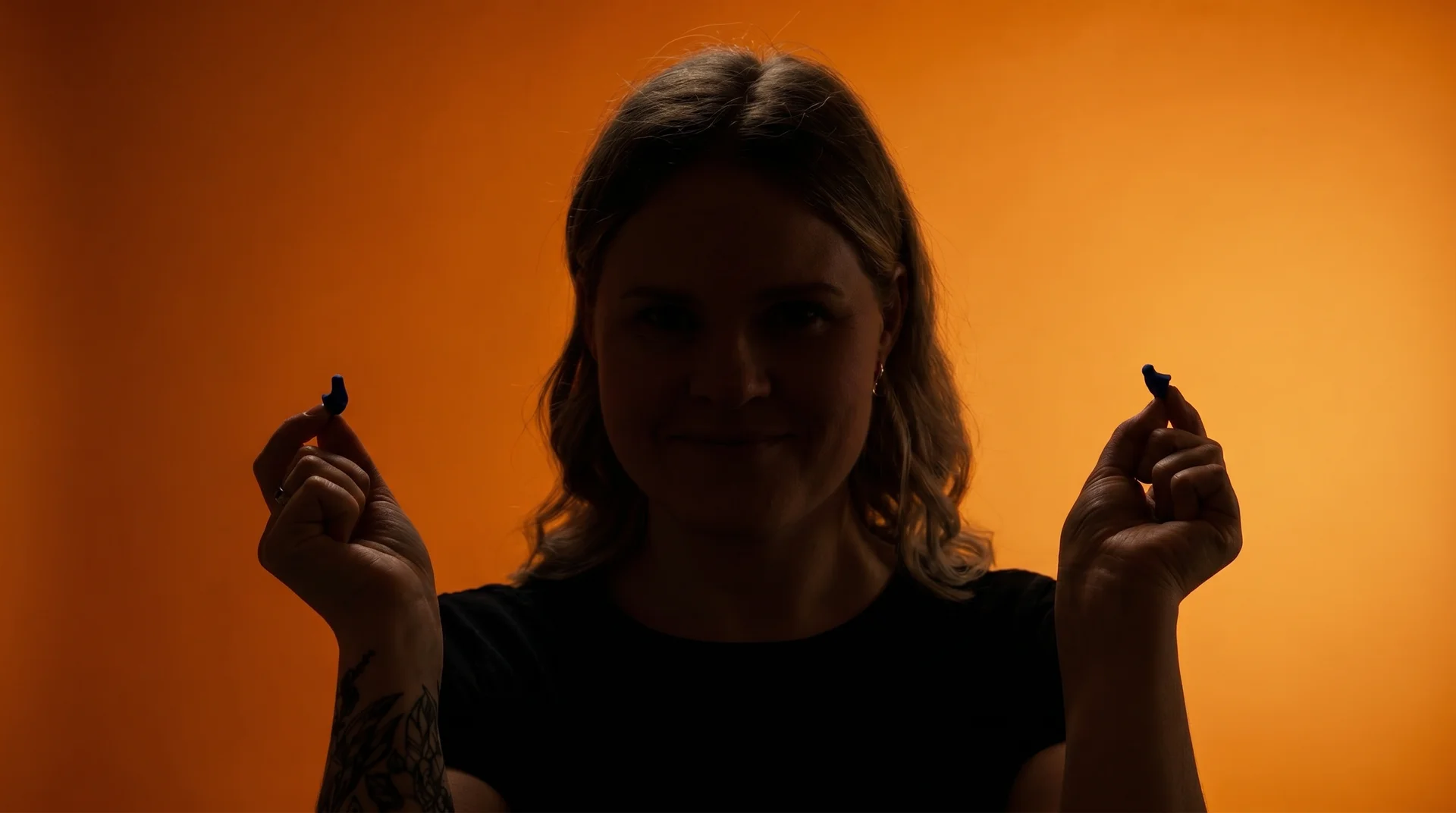
Employees benefit greatly in particular from custom-made earmoulds. These earplugs are fully tailored to the person wearing them and guarantee optimal wearing comfort. Earmoulds reduce the noise level by around 15 to 25 dB(A). What’s more, they can be fitted with various filters. This makes it possible to provide the right protection against any source of noise.
Hearing protection is mandatory! Audinc supplies custom earplugs for the metalworking, industrial, security, printing, nightlife, construction and food industries.
Hearing protection mandatory: we’re here to help!