







Advice based on our own product information and knowledge base, not medical advice.
Hearing protection for musicians: why do artists wear earpieces?

Singers and musicians wear in-ear monitors to hear themselves and the band clearly at a lower stage volume. Read how that works and how musicians without in-ears protect their hearing.
Take the next step for your hearing
Singers wear earpieces during a performance to hear themselves and the band clearly. Those earpieces are called in-ear monitors. They deliver a personal mix straight into the ear, so the singer stays in tune and in time without loud speakers on stage having to point at them. And because they seal the ear canal, they also keep out much of the sound in the venue.
There is a catch, though. An in-ear monitor only protects you if the mix isn’t too loud. If you keep turning up the volume to hear yourself above the band, your ears still get too much to handle, and now directly in the ear canal.
In short
- The earpieces singers wear are in-ear monitors: a personal mix of voice and band, straight into the ear.
- That lets the stage volume come down and helps the singer stay in tune.
- If the mix is too loud, in-ears damage your hearing too.
- Playing without in-ears? Wear earplugs with a music filter.
Why do singers wear earpieces when they perform?
Every stage used to have monitor speakers: the angled boxes on the floor that point at the musicians. They have to be loud enough to rise above the drums, the guitar amps and the room. The result is a stage where everyone wants their own monitor louder, and the overall volume keeps climbing.
With in-ear monitors every musician gets their own mix in their ears. A singer mainly hears their voice and a little of the band; a drummer hears the bass and the click. That has a few advantages:
- you hear yourself clearly, even when the room is very loud;
- you stay in tune and in time with the band more easily;
- you hear the same thing anywhere on stage, even when you move;
- fewer loud monitor speakers are needed on stage.
Look at almost any big concert and you’ll see them: from singers to drummers, most artists wear in-ears. For some, that step only came after damage. Pete Townshend of The Who started using an in-ear monitor system after his tinnitus flared up. You can read his story and that of other musicians in Chris Martin and other famous artists with tinnitus.
What happens when the monitor volume is too high
In-ear monitors seal your ear canal. As a result you hear much less of the room, and your mix can be quieter than a monitor speaker could ever be. That only works if you actually use that headroom.
As soon as you keep turning the mix up, the same thing happens as with headphones that are too loud: your ears get too big a sound dose. A common rule of thumb takes 80 dB(A) for 8 hours as the safe daily dose. Every 3 dB more halves the safe exposure time, so at 95 dB it’s a quarter of an hour. A gig plus soundcheck easily takes longer. You can read how that dose works in how many decibels is harmful.
Tip
Keep your in-ears in, both of them. Take one out to hear the room, and that ear is unprotected in the stage sound while you turn the other one up to bridge the difference. Want to hear the audience? Choose an in-ear with an ambient filter, which lets some of the surrounding sound through with even attenuation.
Which custom in-ear monitors are there?
Custom in-ear monitors are made from an impression of your ears. That means they seal well, stay in place when you move and, with our models, isolate by up to about 35 dB. The difference between the models is mainly the number of drivers, the tiny speakers in each earpiece:
- the In-Ears Essential has two drivers per ear and a clear midrange, a good start for singers and guitarists;
- the Pro 4 has four drivers and a switch between a neutral and a warmer sound;
- the Pro 6, Pro 8 and Pro 10 give an ever larger and more detailed sound image.
With every model you can choose an ambient filter and a soft Flex Tip for sensitive ears, and you can have the outside personalised with a name or band logo.
Playing without in-ears? Choose a music filter
Not every musician plays with in-ear monitors. In the rehearsal room, in a small band or in an orchestra you often just work with the room or with monitor speakers. You need protection then too: rehearsals often take place in small rooms where the sound has nowhere to go.
Ordinary earplugs attenuate the high tones much more than the low ones, so everything sounds dull and you hear yourself poorly. That’s not much use to a musician. A music filter attenuates more evenly, so you keep hearing the nuances of your instrument, only quieter.
Custom Pure Tones
A flat filter that attenuates low, mid and high tones almost equally, for the most natural sound. SNR 10 to 23 dB, up to 28 dB with the Click upgrade. Suitable for singers, keyboard players, string and wind players. View the Pure Tones
Custom Music
A tube filter that attenuates the high tones a little more, with stronger filters: SNR 17 to 31 dB, up to 34 dB with the Click filter. Handy for drummers and anyone standing right next to the amplifiers. View the Custom Music
Whether a soft or a hard earplug suits you better, you can read in hard or soft custom earplugs. You’ll find all the music options side by side at music earplugs.
Invest in your hearing
Your hearing is just as much your instrument as your guitar or your voice. Noise damage in the inner ear doesn’t heal, and in musicians tinnitus often goes hand in hand with that damage. If you want to keep playing for years, protect your ears from the start.
For in-ears and custom earplugs we first take an impression of your ears. You can read how that works in fitting earplugs: how it works.
For musiciansCustom in-ears or music earplugsWe take impressions of your ears and discuss what suits your instrument and stage. Book a free fitting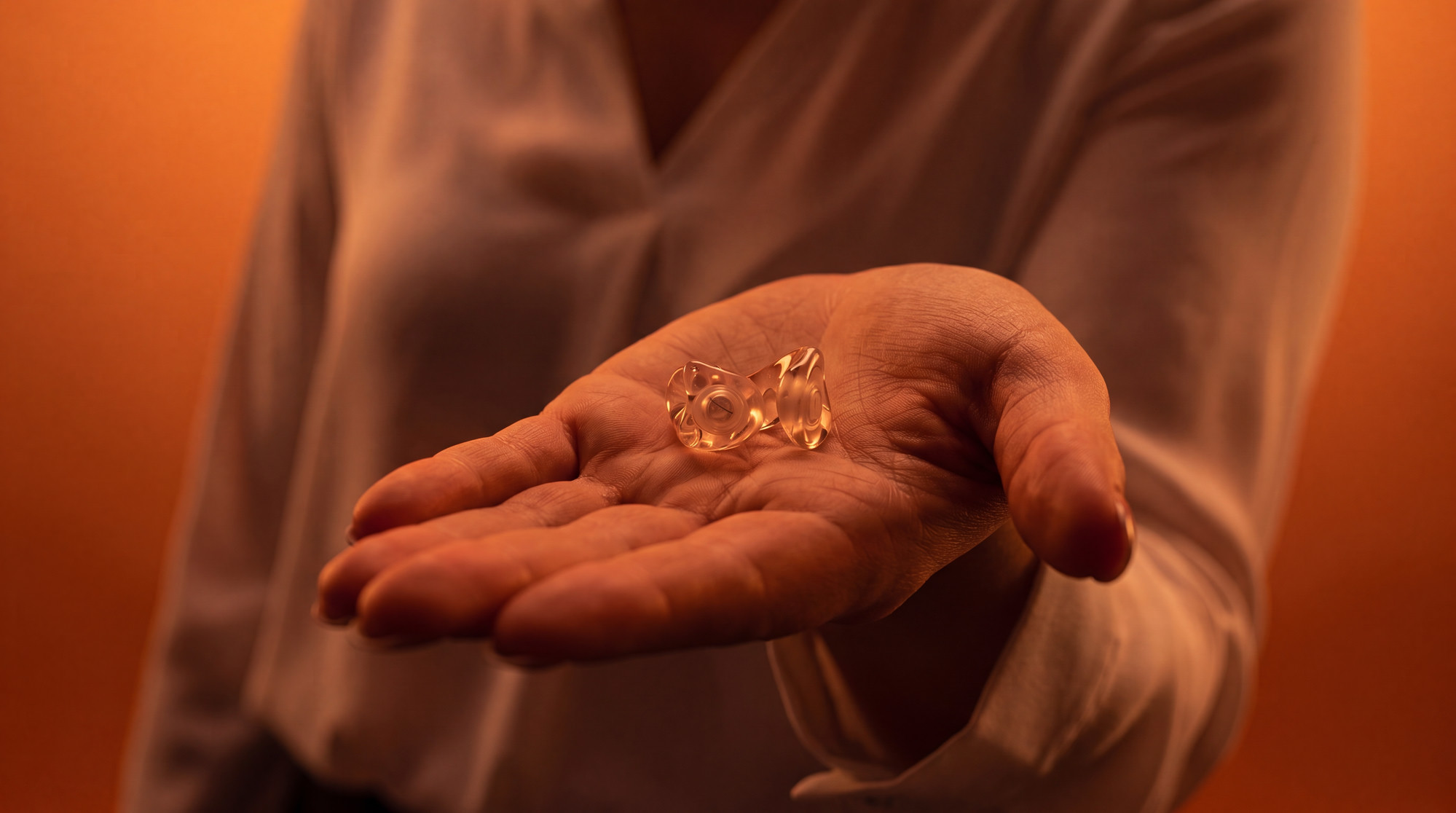
Got a question? We're all ears.
Frequently Asked Questions
Read MoreFAQ
They are in-ear monitors. Through those earpieces the singer hears their own voice and the band in a personal mix, directly in the ear. That helps them stay in tune and in time, and fewer loud monitor speakers are needed on stage. Because the earpieces seal the ear canal, they also protect against the sound in the venue.
Often to hear the audience and the room better, or because the mix in the earpieces does not sound right. The downside is that the open ear is then unprotected in the stage sound, while the other earpiece is often turned up to compete with it. An in-ear with an ambient filter lets some of the surrounding sound through, so you can keep both earpieces in.
That depends mainly on the number of drivers per earpiece. An entry-level model with two drivers costs less than a model with ten drivers for a large, detailed sound image. The current prices are on the product pages of the In-Ears Essential and the Pro 4 to Pro 10.
They seal your ear and so attenuate the sound from outside, by up to about 35 dB with our models. But the sound of the mix goes straight into your ear. If that is too loud, you can still damage your hearing. So keep the monitor volume as low as you can.
Earplugs with a music filter. A flat filter, like the one in the Custom Pure Tones, attenuates all tones almost equally, so your instrument and the band keep sounding natural. Drummers, or anyone standing right next to the amplifiers, may need a stronger filter, like the one in the Custom Music.
Related blog articles
Famous People With Tinnitus: Chris Martin and Other Artists

How loud is a festival? How to protect your hearing on a festival day

Earplugs for going out: hearing protection in the nightlife