





Advice based on our own product information and knowledge base, not medical advice.
Earplugs for fireworks: how to protect your ears (and your children's)
Fireworks still go off at New Year, even where consumer fireworks are banned. Read how loud fireworks are, why children are more vulnerable, which earplugs or ear muffs to choose and what to do if your ears ring after a bang.
Take the next step for your hearing
In many European countries, New Year’s Eve still comes with fireworks. The rules differ from country to country, and often from town to town: who can buy fireworks, when and where you can set them off, and whether consumers can set them off at all. In the Netherlands, for example, consumers have not been allowed to set off fireworks since 1 August 2026, and the 2026/2027 New Year is the first under the ban (Dutch government). Sparklers are still allowed, and organised displays still go ahead. Even under a ban, it doesn’t go quiet: displays carry on, and in many neighbourhoods illegal fireworks still go off.
A single loud bang close by can already damage your hearing permanently. Below you can read when you are at risk, why children are extra vulnerable, which protection to choose and what to do if things go wrong after all.
In short
- Bangers can peak above 140 dB up close. One bang can be enough for permanent damage.
- Even where consumer fireworks are banned, displays and illegal fireworks remain a risk.
- For one evening, properly inserted universal plugs are fine. Young children get ear muffs.
- Suddenly hearing worse after a bang? Call your GP or the out-of-hours doctor service straight away.
How loud are fireworks?
With fireworks, the problem isn’t a sound that lasts a long time, as in a club, but short, extremely loud peaks. A bang close by can exceed 140 dB. That is far above the pain threshold, and such a peak is so short that your ear has no time to protect itself.
EU rules (Directive 2013/29/EU) divide consumer fireworks into categories F1 to F3, with F4 reserved for professionals. They set minimum ages of 12 for F1, 16 for F2 and 18 for F3, and countries are allowed to be stricter. Legal consumer fireworks may produce at most 120 dB(A, imp) at the safety distance, which is 8 metres for F2. Closer than that, or with illegal fireworks, the level is much higher.
For comparison: with continuous sound, your ears can cope with 80 dB(A) for about 8 hours, and every 3 dB more halves that time. At 100 dB you reach your daily dose after about 5 minutes. A firework bang is far above that. A single very loud bang can damage your hearing in one go. More examples of sound levels and what they do can be found in how many decibels is harmful.
How big the risk is depends mainly on distance. Every metre further away makes a difference. If you stand right next to a bang or set fireworks off yourself, you run the greatest risk.
When are you at risk, even under a ban?
- At a fireworks display. Displays are organised and at a distance, but at the front it can be very loud. Especially with children, a spot further back is sensible.
- In a neighbourhood with illegal fireworks. Illegal bangers are often heavier than legal consumer fireworks, and they are set off unpredictably: in the street, between houses, sometimes right next to pedestrians.
- If you go outside around midnight. That is when the most goes off, and between buildings the sound bounces back.
- In the days before and after. In some neighbourhoods the bangs start well before New Year's Eve.
Staying indoors helps too, of course, although it is less fun. If you want to go outside to see in the new year, take something for your ears.
Why children are more vulnerable
Babies and young children have a small ear canal. As a result, sound can reach their eardrum relatively louder than in adults. On top of that, they can do little themselves: they don’t walk away from a bang, don’t put their hands over their ears in time and can’t easily tell you that something hurt or that they hear ringing afterwards.
Babies and toddlers
Ear muffs in a children's size. They are easy to put on, you can see straight away whether they fit properly and they cannot disappear into the ear. Make sure they seal well all round: a thick hat underneath lets sound through. Small earplugs are not suitable at this age.
Older children
Ear muffs are still fine. Custom earplugs are usually possible from about 4 years, when the child can sit still for a moment and the ear canal is large enough. How we assess that for each child, you can read in from what age you can have earplugs fitted. Universal plugs often fit children badly and quickly fall out.
Which earplugs should you choose for fireworks?
You don’t necessarily need to buy something expensive for one evening a year. What counts is that the protection fits properly at the moment of the bang.
Universal plugs
Fine for one evening, as long as you insert them properly. Roll foam plugs up thinly, pull your outer ear slightly back and up and hold them for a moment until they expand. If the plug is only halfway in, it blocks very little.
Filter earplugs you already have
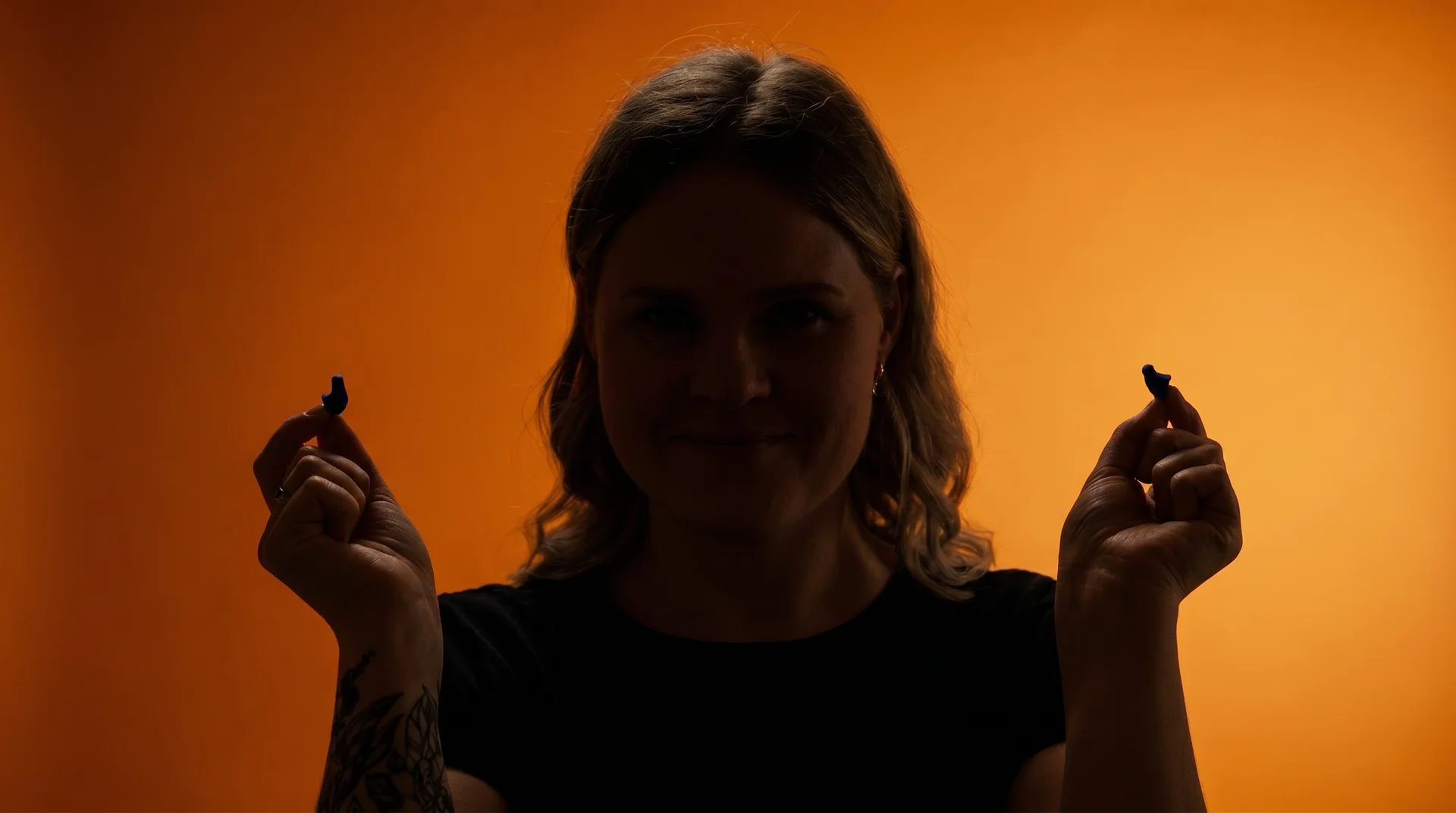
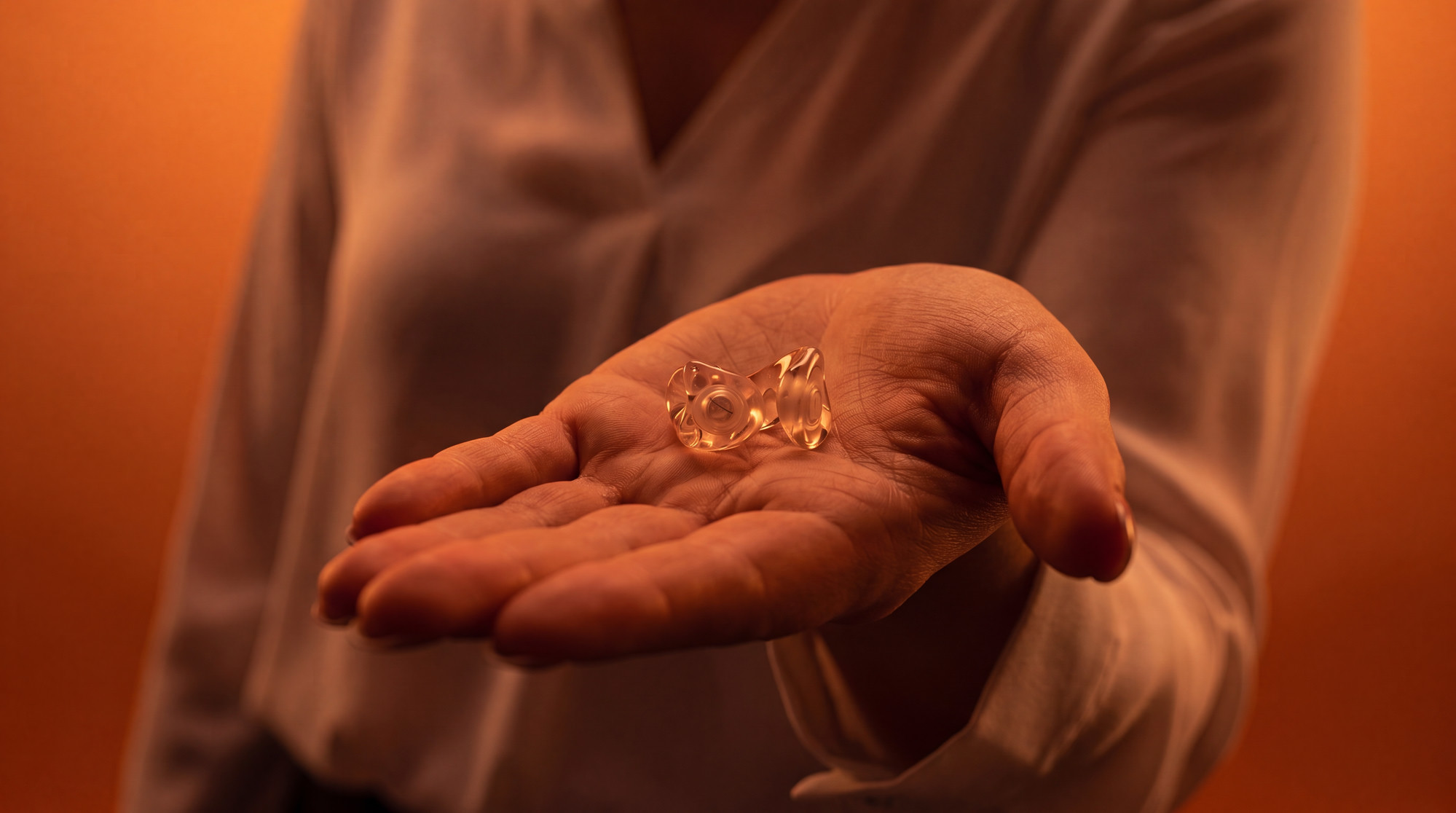
Do you already have custom earplugs for music, work or DIY? Take them with you. They seal well and you can still talk normally and see in the new year with them in.
Impulse filter
Made for bangs. The Custom Impulse attenuates constantly with SNR 21 dB and attenuates harder the louder the bang, up to 34 dB for heavy peaks. Especially handy if you also use it for shooting sports, hunting or work with bangs.
Already have custom earplugs with a filter? The filters of the Custom Music and the Pure Tones are interchangeable, so for New Year you can put a stronger filter in your own earplugs. You can order separate filters in our shop: the Pure Tones filter (€19.00), the Custom filter (€9.00) and, for earplugs with an impulse filter, the Impulse filter (€15.00).
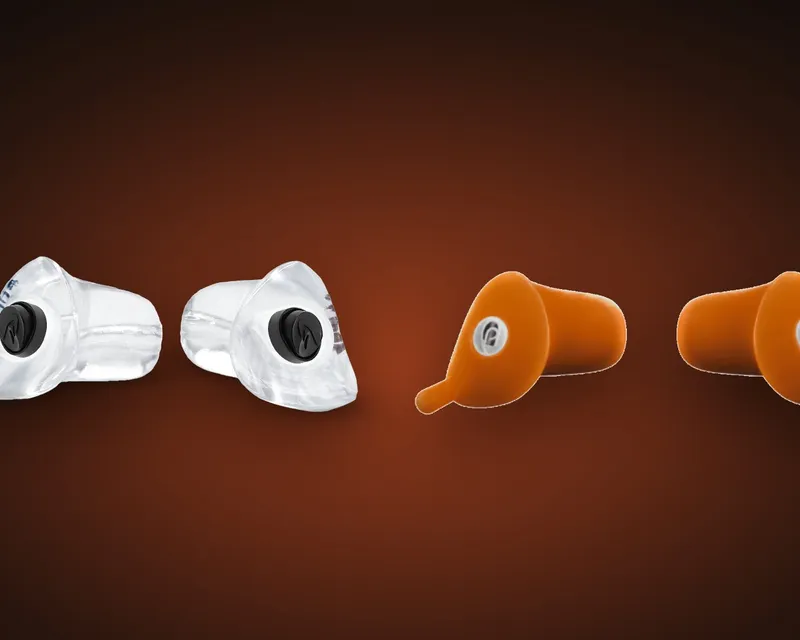
Unsure whether to go universal or custom? We explain the difference in fit and attenuation in universal earplugs or custom earplugs. Prefer something over your ears? Ear muffs work fine for adults too, such as our ear muffs. Take a look at the Custom Impulse if you want an earplug that also protects against bangs outside New Year.
Ringing or a deaf feeling after a bang?
Ringing or a dull feeling after a loud bang is a sign that your ears have had too much. It often fades within a few hours to a day. Even so, damage may have occurred, even if you seem to hear normally again afterwards. How to prevent that kind of damage in future is explained in how to prevent tinnitus.
Note
Do you suddenly hear worse after a bang, does your ear feel deaf, are you in a lot of pain or do you feel dizzy? Then call your GP straight away (out of hours: the out-of-hours doctor service, or 112 in an emergency), even on New Year's night. With sudden hearing loss, acting quickly matters. If you still have ringing after a day, contact your GP as well. If it concerns your child, don't wait either.
Less startle and less stress
Not everyone enjoys fireworks. If you are sensitive to loud or unexpected sounds, you can be tense for days around New Year. Earplugs reduce the bangs, so you are startled less and experience the evening as calmer. That also applies to children and adults who quickly become overloaded; you can read more about this in earplugs for autism and sensory overload.
Do you have pets? Earplugs for people are not suitable for animals. Ask your vet what you can do if your dog or cat is very frightened of fireworks.
Custom ImpulseProtection that attenuates harder when the bang is louderCustom-made, with a filter for bangs and peaks. View the ImpulseWant custom earplugs for New Year? Allow 15 working days for production, and book a free fitting in good time. A rush order is possible. Not near one of our locations? Have impressions taken locally and send them to us.
Sources
- EUR-Lex: Directive 2013/29/EU on pyrotechnic articles
- Business.gov.nl (Dutch government): No sales of consumer fireworks due to ban
Got a question? We're all ears.
Frequently Asked Questions
Read MoreFAQ
Often you do. Where consumer fireworks are banned, as in the Netherlands since 1 August 2026, organised displays usually still go ahead, and in many neighbourhoods illegal fireworks are still set off. If you are at a display, live in a street with a lot of bangers or go out around midnight, hearing protection is a sensible choice.
For babies and toddlers, ear muffs are the safest choice: small earplugs can go in too deep or be swallowed. Custom earplugs are usually possible from about 4 years, when the child can sit still for a moment and the ear canal is large enough. Universal plugs often fit children badly.
For young children, ear muffs in a children's size. They are easy to put on, you can see straight away whether they fit properly and they cannot disappear into the ear. Make sure the cups seal well all round; a hat underneath or glasses make the seal worse. Older children can also wear custom earplugs.
They reduce the bangs, so many people are startled less and experience the evening as calmer. That helps especially if you are sensitive to loud or unexpected sounds. Fear of fireworks doesn't go away with them; if it bothers you a lot, discuss it with your GP.
If you suddenly hear worse after a bang, your ear feels deaf or you are in a lot of pain, call your GP straight away, or out of hours the out-of-hours doctor service (112 in an emergency), because with sudden hearing loss acting quickly matters. If you still have ringing after a day, contact your GP as well.
Related blog articles

Earplugs for autism: less sensory overload at school, at work and in bed
Universal earplugs (like Alpine) or custom-made?

Hard or soft custom earplugs: material, colour and which one suits you