





Earplugs for festivals: protect your hearing without missing the music
How loud is a festival really, what does that ringing afterwards mean and which earplugs actually work? All about hearing protection at festivals, plus practical tips.
Take the next step for your hearing
A festival day quickly runs to eight or twelve hours. Your ears are switched on the whole time, at the bar and between the stages as well. Good earplugs make sure you still hear clearly at the end of the day and can hold a conversation along the way. Below you can read how loud festivals really are, what the difference is between the types of hearing protection, and what to look out for when choosing earplugs for festivals.
How loud is a festival really?
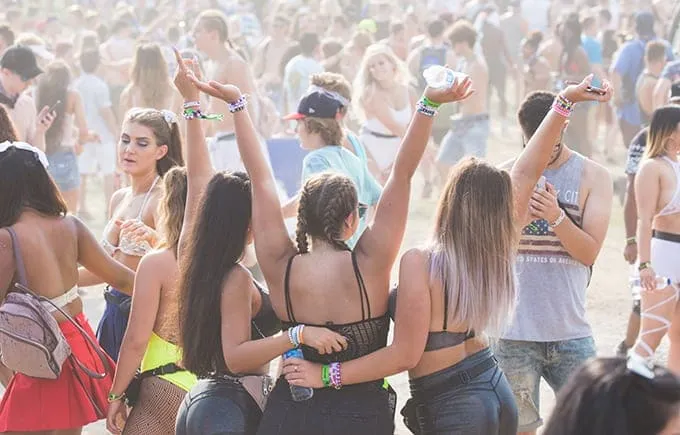
Sound above 80 decibels can already cause damage with prolonged exposure. At 85 dB your ears will on average cope for around two hours. In a festival tent you are quickly at 95 dB or more, and close to the main stages the sound level climbs to around 103 dB. At 100 dB, permanent damage can occur within a quarter of an hour. Add a full day of that, and you understand why hearing protection at a festival is not an over-the-top precaution.
A common thought is that it is not so bad outdoors, because the sound can travel in every direction. That is only partly true: in the open air the load is lower than in a venue, but you are not risk-free. Stand close to the speakers for an hour and the difference from a concert hall is small.
Why hearing damage creeps up on you
Hearing damage does not hurt and does not arrive with a bang. Loud sounds damage the tiny hairs in your inner ear, and those do not recover. It starts gradually: you understand people in a busy café slightly less well, or certain high tones no longer come through. Because each festival only adds a little, you notice it only once something has already gone. And what has gone does not come back — hearing aids can amplify, but not repair.
That ringing afterwards: a warning
Almost everyone knows it: the ringing or hissing when you get home and it is quiet. That ringing is not a harmless side effect but a sign that your ears have been overloaded. Usually it fades the next day. Sometimes it does not. If the sound stays — a ringing, crackling or buzzing that you also hear at night — it is called tinnitus. That condition cannot be cured; you can only learn to live with it. Prevention is the only real solution, and that is exactly what earplugs do.
Foam plugs, filter plugs or custom-made earplugs?
At many festivals free foam plugs are handed out. Anything is better than nothing, but there are drawbacks. They attenuate unevenly: the high tones largely disappear while the bass stays. As a result the music sounds dull and you can barely understand your friends — the main reason people take them out again after half an hour. They often sit uncomfortably and can break off inside your ear canal, after which you have to get your ear flushed out at the first-aid post. And you still have to find them somewhere on the site; for many visitors that hunt is the moment they decide they can manage without. So always bring something of your own.
Filter plugs work differently. They contain an acoustic filter that lowers the sound level across the whole range, so the music stays in balance. Depending on the filter they attenuate 11 to 28 dB. You hear the music the way it was meant to sound, only quieter, and conversations stay intelligible. If you go to a festival once a year, a universal filter plug from the chemist is a reasonable first step. If you go more often, or play yourself, custom-made hearing protection is the better investment. Some wearers even say the music comes across better with a good filter in.
Why custom-made sits better on a long day
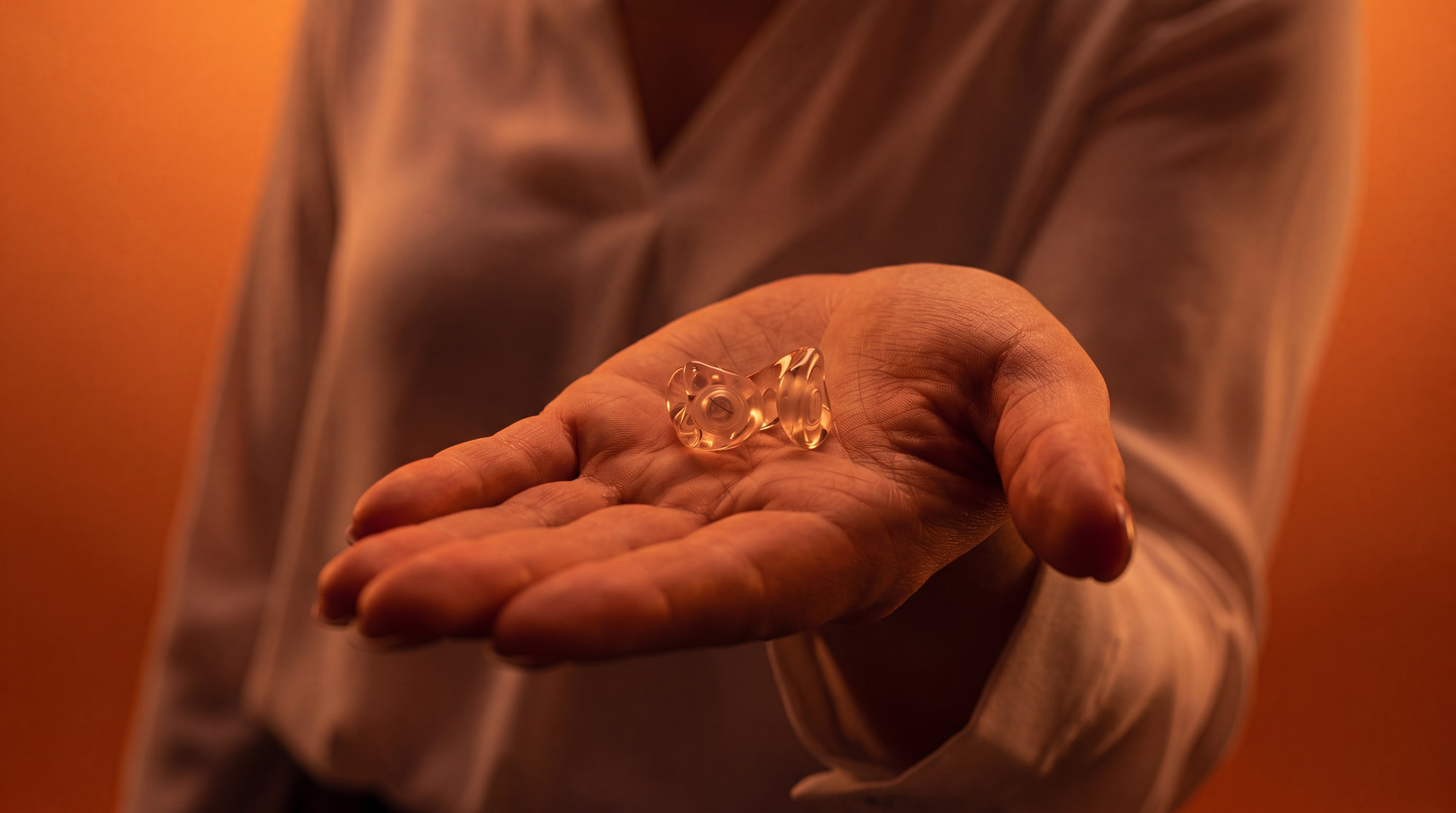
Custom-made festival earplugs are cast from an impression of your own ears. That delivers two things. First, they really do seal: with a universal plug that does not quite fit, sound leaks in along the edge and you never reach the stated attenuation. Second, they stay in place without pressing, even after ten hours. Plugs you forget about are plugs you keep in — and in the end that is what it comes down to.
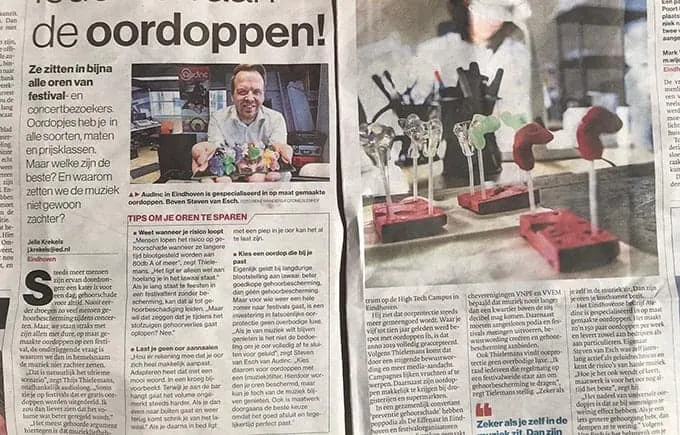
At Audinc we make them in our own 3D lab in Eindhoven. Taking the impression takes about six minutes; for the whole appointment we plan twenty minutes, so you can look at demos in peace and choose your colour. The production time is 15 working days, with a rush option if things are tight. You get at least 2 years’ warranty and a 100% comfort guarantee, and with good maintenance they last four to five years. Want to know more about flat attenuation and the different filters? Have a look at earplugs for music.
Practical tips for the festival day
- Put them in before you walk onto the site. Not once it starts to feel too loud: by then you have already taken the first load.
- Keep your distance from the speakers. Right in front of a speaker stack the sound level is many times higher than ten metres further back. A spot slightly further back or off to the side makes more difference than you think, and the sound there is usually better mixed.
- Take breaks. A quarter of an hour in a quiet place gives your ears recovery time. Plan those breaks around the acts you did not want to see anyway.
- Keep them in for your favourite act. That is precisely when the temptation to take them out is greatest. And that is precisely the moment when most damage happens. With filter plugs you miss nothing: you hear the same music, just at a level your ears can handle.
- Sleeping at the campsite? Bring separate sleeping plugs for that. Those attenuate as much as possible and are made to be comfortable to lie on when you sleep on your side — a different job from filtering music.
Care and preventing loss
Plugs you have paid for get treated differently from free foam ones: you look after them better and take them along more often. Keep them in the case supplied on your keyring or in your bag, not loose in your pocket — that is where you lose them and where they collect fluff. Clean them after a festival with a cleaning spray that does not attack the silicone and let them dry before you put them away, so the filter channel stays open.
Lost them anyway? If you took out our warranty cover at the fitting, you are insured against loss for a year from that date and only pay the excess. You report it through the warranty form; the conditions are set out in our service policy.
In short
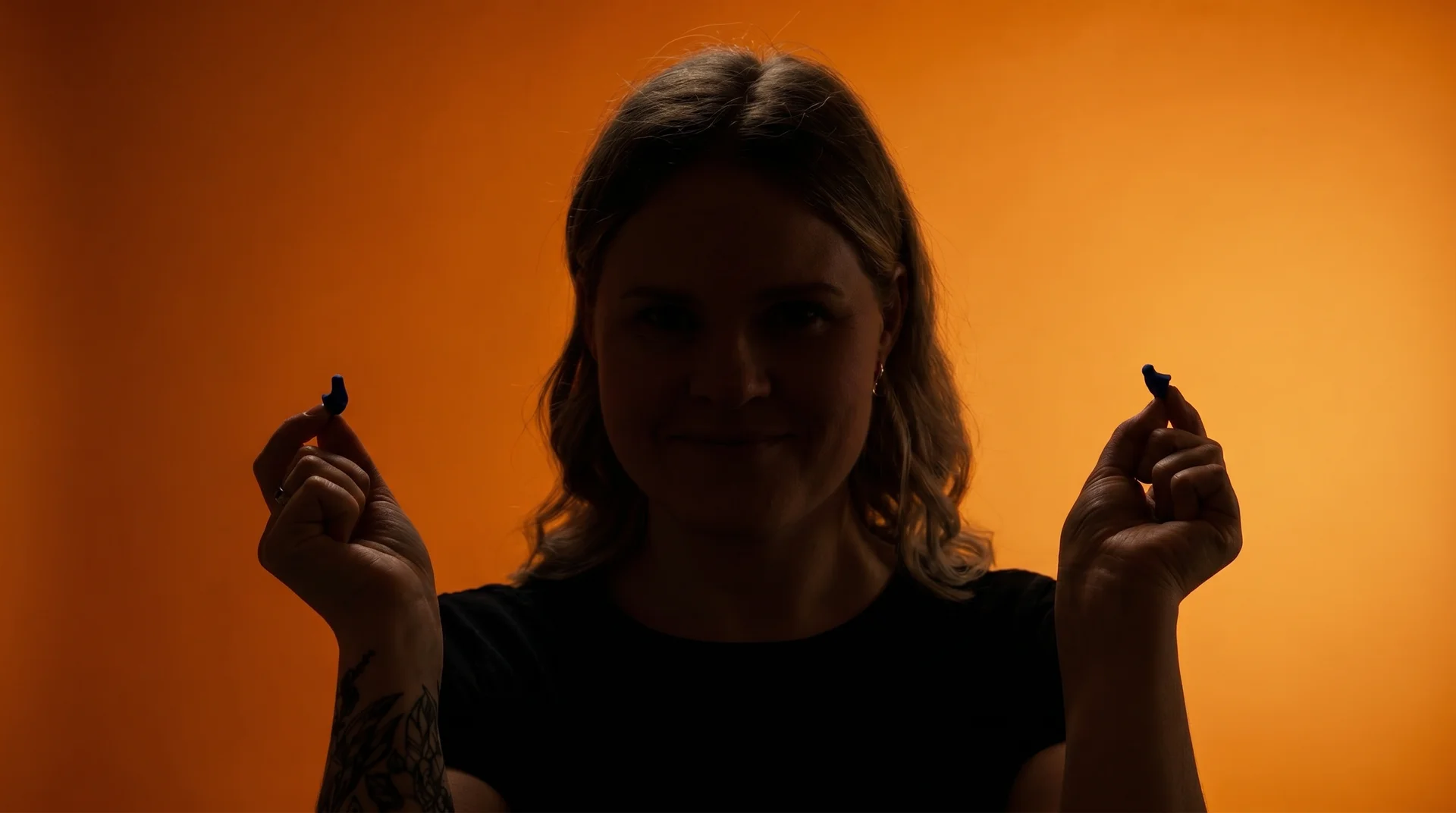
A festival is loud enough to cause damage within a quarter of an hour, and that damage does not heal. Good earplugs cost you nothing in terms of experience: they bring the volume down and leave music and conversations intact. See which filters and models suit your festival summer at Audinc festival earplugs, or book an appointment to have your ears fitted. Not sure about the filter? Get in touch with no obligation.